


University pathways from Poly to Uni
Post Date: 06 Jan 2026
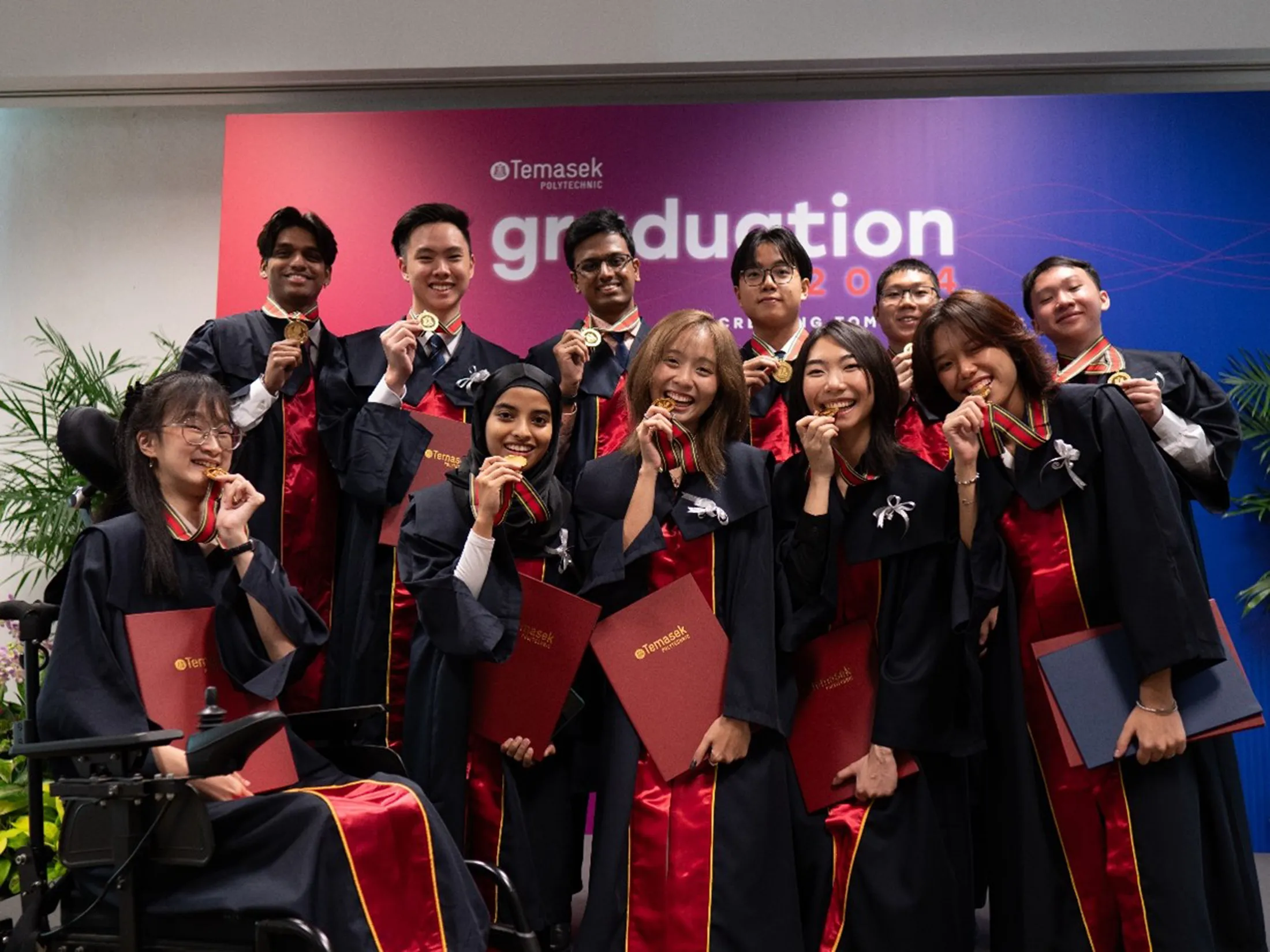
Are you halfway through your polytechnic journey and already planning life after your diploma? Or gearing up for graduation and wondering how to take that next big step into university?
In the Singapore education pathway, completing a diploma at one of the local polytechnics is just one of several routes that can lead you to university. The percentage of poly students going to university is encouraging - 2025 MOE statistics show that around one-third of polytechnic students continue their studies at a local university.
Singapore has six local universities offering degree programmes:
- NTU (Nanyang Technological University)
- NUS (National University of Singapore)
- SMU (Singapore Management University)
- SIT (Singapore Institute of Technology)
- SUSS (Singapore University of Social Sciences)
- SUTD (Singapore University of Technology and Design).
Beyond these, you’ll also find a wide variety of private and overseas universities to choose from. With so many options, navigating the journey from poly to uni can seem quite complex.
If you’re considering the university pathway after graduating from TP, this guide is for you!
1. How Many Polytechnic Graduates Go To University?
According to Ministry of Education figures, graduates of local polytechnics accounted for more than 40% of the 2024 intake at the six local universities. Additionally, around 60% of Temasek Polytechnic graduates pursue further studies at a university.
TP graduates step into university ready to thrive - equipped with the skills, confidence and adaptability shaped by our forward-thinking curriculum. With a strong focus on future-ready learning, close industry partnerships and real-world problem-solving, TP prepares students to meet university demands head-on.
Building on this strong foundation, degree programmes allow you to deepen your expertise and develop advanced skills, which can be helpful for postgraduate studies and senior roles in your future career.
Hear from two of our own success stories, who went on to pursue a university pathway in Singapore after graduation.
1.1 Temasek Polytechnic Success Stories
Noorhakim B Jasman
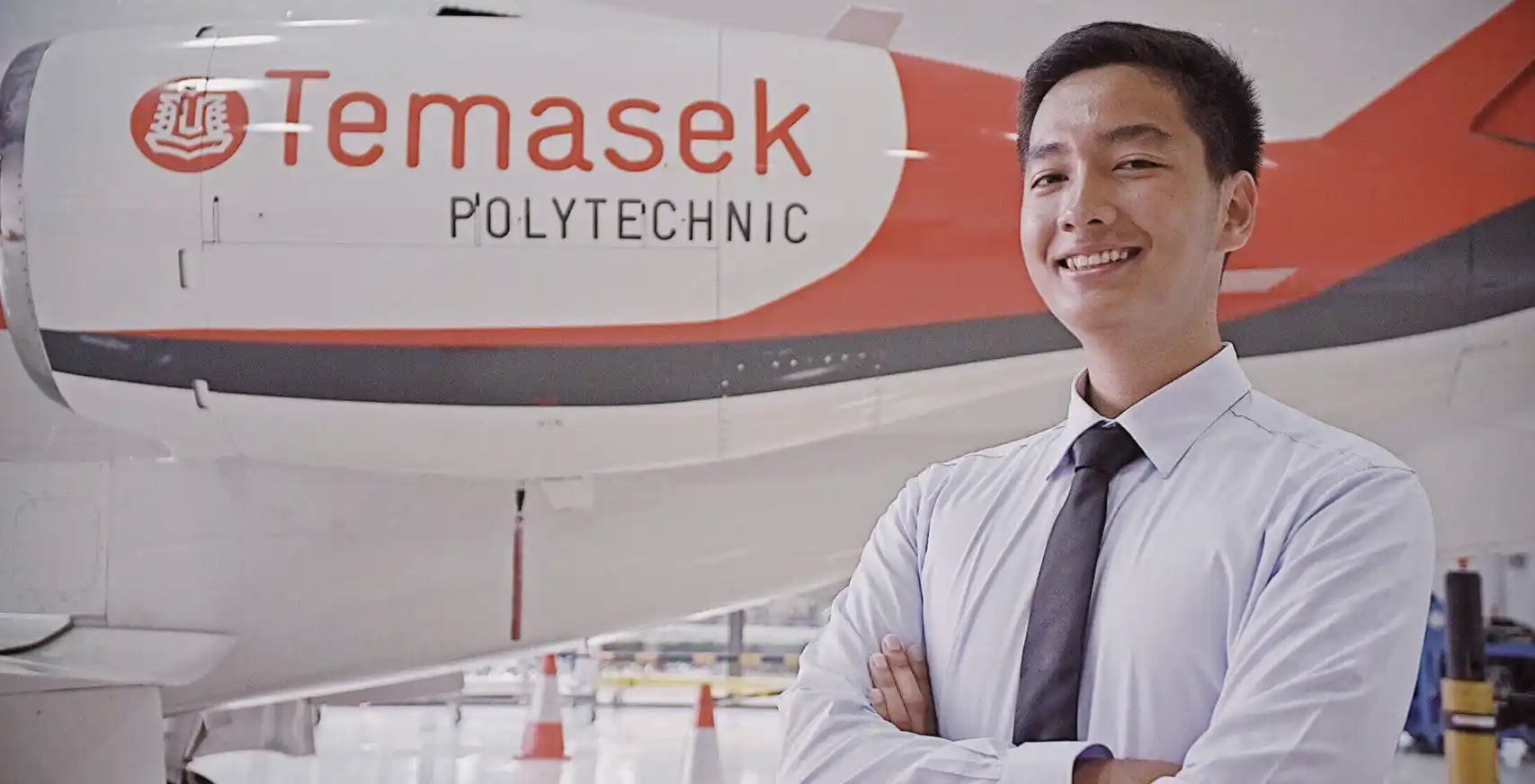 TP graduate Noorhakim B Jasman completed his Diploma with Merit in Aerospace Electronics and subsequently pursued a Degree in Electrical and Electronic Engineering at NTU.
From day one at TP, Noorhakim B Jasman had a clear goal in mind: earn a place at a local university.
That focus paid off. He graduated top of his class with a Diploma with Merit in Aerospace Electronics, maintaining a perfect GPA of 4.0 across three years - a feat that demanded discipline, consistency, and meticulous preparation for every graded assignment, no matter how small the weighting.
Noorhakim credits his success to setting clear goals early, preparing ahead of lectures, making full use of TP’s learning resources such as the TP-LMS, managing his time well, and staying actively involved in school life to build a well-rounded learning experience.
Today, he has taken the next step in his journey, pursuing a Degree in Electrical and Electronic Engineering at NTU - turning ambition into achievement.
Alina Seow
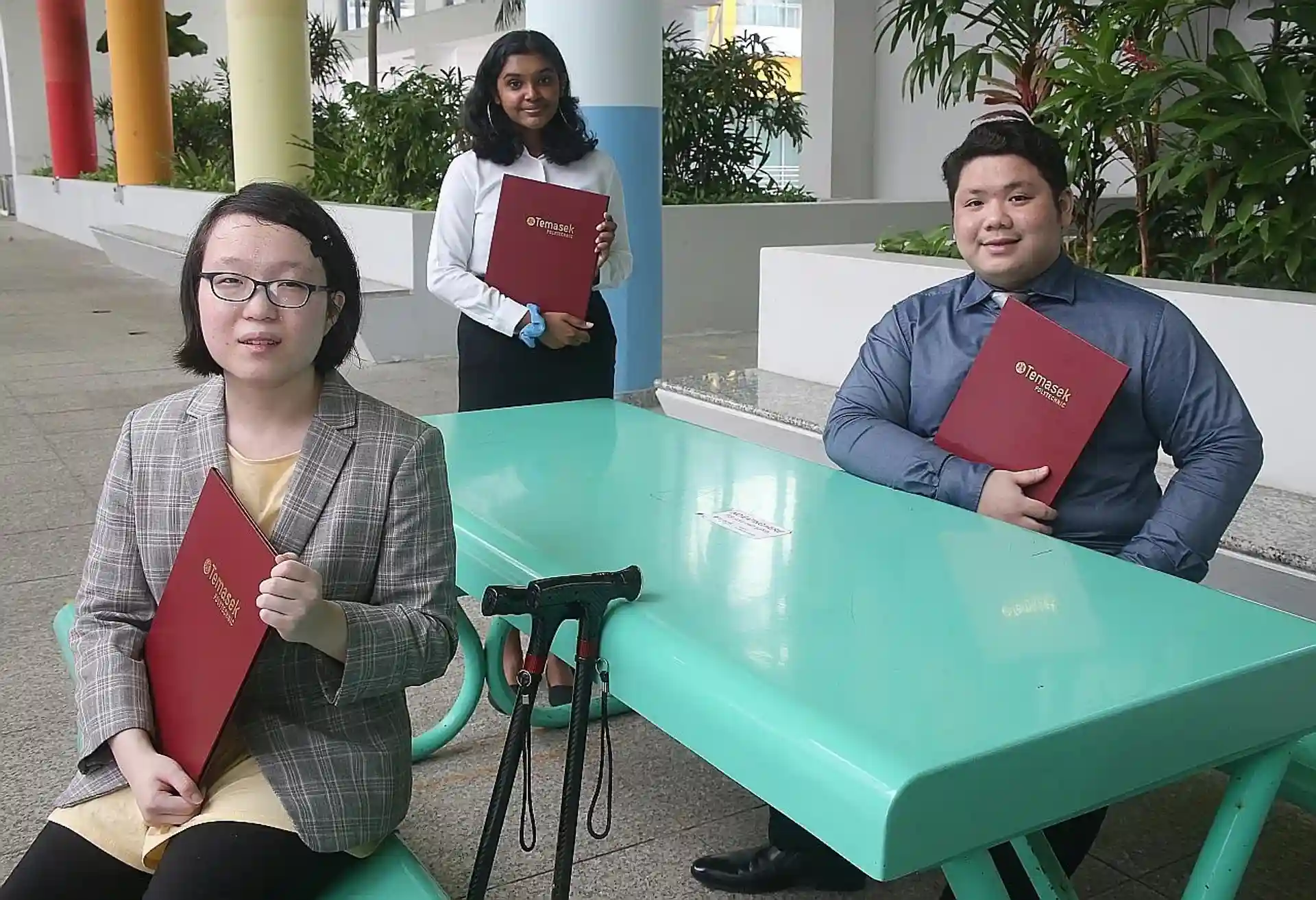 TP graduate Alina Seow (seated on the far left) completed her diploma in Information Technology and subsequently pursued a Degree in Smart City Management & Technology at SMU.
Alina Seow’s journey from poly to university is one defined by resilience, determination and belief in her own potential.
Diagnosed with diplegic cerebral palsy as a child, Alina never allowed her circumstances to limit her ambitions. She pursued her passion for horse-riding while completing her Diploma in Information Technology at TP, proving that perseverance and adaptability can open doors.
Reflecting on her journey, Alina shared, “I am no different from anyone else. I only have to find different ways to get the same results.”
She credits the unwavering support of her lecturers at TP, who consistently looked out for her and encouraged her throughout her studies. In recognition of her courage and perseverance, Alina received the Ngee Ann Kongsi Most Outstanding Overcomer Award. She took her next step forward by pursuing a Degree in Smart City Management & Technology at SMU.
2. How To Get Into University From Poly: The Traditional Pathway
Poly grads aspiring to enter a university usually begin applying for a degree programme at the end of their fifth semester (Year 3).
Before submitting your application, you’ll need to know your cumulative Grade Point Average (GPA) from the first five semesters in poly.
2.1 How To Calculate My GPA in TP?
Use the formula below:

Refer to the TP Grading System for your subject grade point:
Grade |
Description |
Grade Point |
Z |
Distinction (up to the top 5% of candidates taking the subject may be awarded Z) |
4 |
A |
Excellent |
4 |
B+ |
Very Good |
3.5 |
B |
Good |
3 |
C+ |
Above Average |
2.5 |
C |
Average |
2 |
D+ |
Below Average |
1.5 |
D |
Pass |
1 |
F |
Fail |
0 |
2.2 How Do I Apply For Admission To University?
Let’s walk through the university application process together:
- Check the application period:
Visit your preferred university’s website to confirm the application timeline. For the six local universities, this typically runs from October to March.
- Submit your application through the university’s admissions portal:
Apply through the university’s admissions portal within the stated period. You’ll need your cumulative GPA from the first five semesters, so ensure your records are ready.
- Showcase your achievements:
Strengthen your application by including relevant supporting documents such as your TP Skills Transcript, CCA records and portfolios. We’ll explore how to prepare these in more detail later in the article.
- Receive a conditional offer (if eligible):
If your application meets the university’s criteria, you may be issued a conditional offer. This means a place has been offered, but it is dependent on your final GPA meeting the university’s requirements.
- Submit your final semester results:
Once your final grades are released, you’ll need to upload them to the university’s portal. If your overall GPA meets the threshold, your conditional offer will be converted into a final offer,
- Prepare for interviews or assessments (if needed):
Some universities may require additional interviews or assessments before confirming your admission. This is an opportunity to demonstrate your readiness and motivation.
3. How To Apply For A University Scholarship
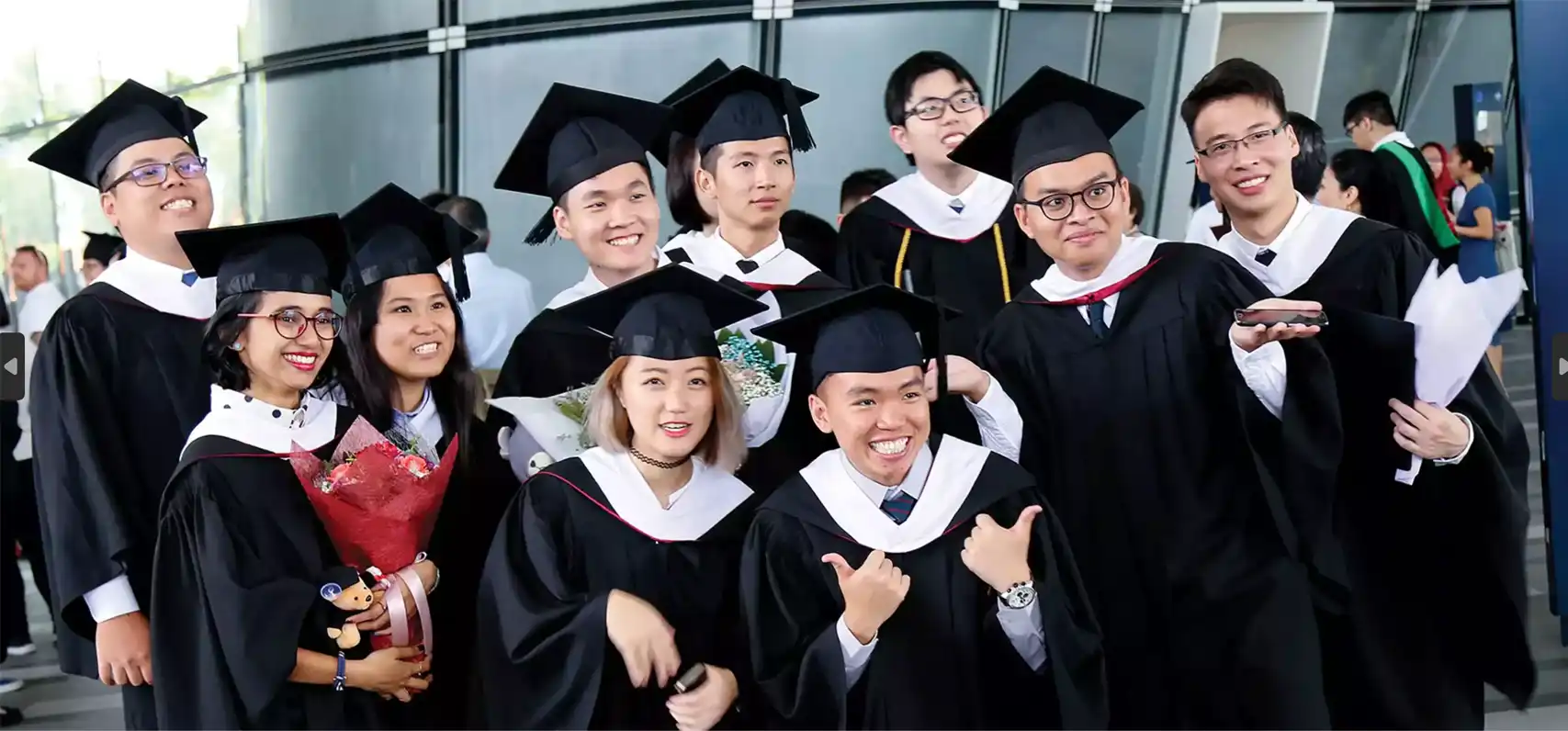 University scholarships provide fully-sponsored tuition fees, learning materials, and living expenses.
If you are eligible, consider applying for a scholarship. Scholarships offer financial support for your university education, with many covering fees for tuition, learning materials, and even living expenses. Some scholarships also offer overseas exchange opportunities.
Many universities and organisations offer scholarships for poly grads. Note that scholarships offered by organisations may require a bond, which is a contractual agreement that legally requires you to work for the organisation after completing your studies.
To get started, explore your options on these portals:
- BrightSparks: An all-in-one scholarship portal that helps students compare scholarships.
- Scholars’ Choice: A directory of Singapore’s top scholarship programmes.
- Scholarship Guide: A resource for students to find scholarship opportunities.
4. Fast Track Your Journey With TP’s Diploma-Specific University Pathway Programmes
You may have heard of seniors graduating earlier from university due to module exemptions in their degree programmes. How did they do it?
Look no further than the TP University Pathway Programmes (UPP).
What is a Pathway Programme?
If you’re a first or second-year student, consider joining TP’s University Pathway Programmes (UPP) to get a head start on your degree even before you enter university.
How does it work?
These programmes are jointly run by TP and three partnering local universities: SUTD, NUS, and SMU. You’ll be able to take modules taught by one of these universities in your final year of diploma studies.
When you complete these modules, you’ll earn university-recognised credits. These credits are accepted by SUTD, NUS, and SMU when you enrol, so you can graduate earlier than peers who start from scratch.
Poly SUTD Scholars Programme (PSPP) with SUTD
The Poly SUTD Scholars Programme (PSPP) is jointly offered by Temasek Polytechnic (TP) and the Singapore University of Technology and Design (SUTD). PSPP allows students to read SUTD-developed modules while completing their final year at TP. Students who successfully complete the programme may receive conditional admission and advanced standing at SUTD.
TP–NUS Pathway Programmes
Through its strategic partnership with the National University of Singapore (NUS), TP offers dedicated pathway programmes in disciplines such as Electrical, Mechanical and Biomedical Engineering. These pathways allow selected diploma students to take NUS-mapped modules during their course of study at TP, with credits recognised upon admission to NUS.
TP–SMU Computer & Information Systems Pathway
The TP–SMU Computer & Information Systems Pathway reflects TP’s collaboration with the Singapore Management University (SMU), tailored for students pursuing computing and information systems-related diplomas. Participants take university-level modules aligned with SMU’s curriculum, particularly in areas that integrate technology with business and analytics.
Together, these University Pathway Programmes reflect TP’s partnerships with Singapore’s universities, offering students accelerated, well-supported pathways from diploma to degree.
Access the list of TP University Pathway Programmes here.
5. Beyond Grades: What Else Should I Prepare For My University Application?
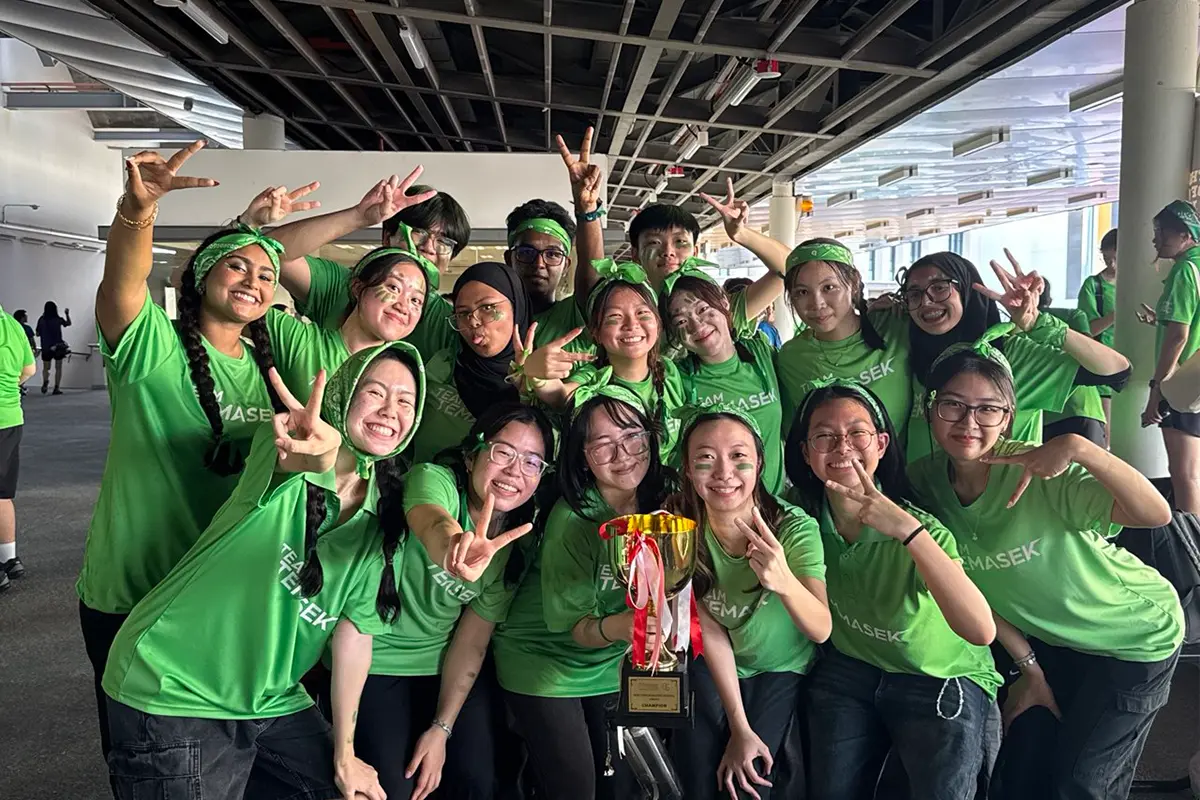 In addition to academic achievements, poly graduates can leverage their non-academic achievements, such as CCA leadership positions, to make their application stand out.
The previous examples demonstrate the importance of your poly GPA to university admission. However, today universities look beyond academic achievements. Your non-academic achievements also play a part in helping you secure your spot.
5.1 CCA
Your CCA journey demonstrates your interests and can give your university application an edge. You can submit CCA track records that show you’ve performed in leadership roles, led campaigns and projects, or won awards at competitions like International Olympiads. Showcase depth over breadth in your roles, as this demonstrates your ability to work toward long-term goals and contribute meaningfully.
For example, you can submit evidence that you’ve:
- Held leadership positions (Club President, Committee Member)
- Organised large-scale events (hackathons, fundraisers)
- Represented your school or Singapore in a competition (Olympiad, essay competitions, inter-school tournaments)
- Produced work for publications and projects (school magazines, short film production)
5.2 Community Service
Volunteering and community service projects can distinguish you from students with similarly outstanding academic and CCA achievements. They demonstrate your character and TP Cares spirit, and highlight the causes you care about.
For example, you can submit experiences such as:
- Volunteering with animal shelters, local charities, or non-profit organisations
- Mentoring peers or juniors (tutoring, CCA mentorship)
- articipating in overseas community service trips
5.3 Past Work Experience
Relevant work experience demonstrates your aptitude. List your poly internships, key leadership roles, and projects related to your degree program. Volunteering with organisations or associations also demonstrates responsibility, teamwork and real-world impact, all of which universities value.
5.4 Portfolios
Portfolios are a compilation of your past achievements and work - these are unique experiences that set you apart from other applicants. The projects you mention should be relevant to your degree. Include any award-winning work (essays, projects, or prototypes you’ve presented in challenges and competitions), internship work, and even publications.
5.5 Interviews
Some universities may invite you for an interview as part of their applicant assessment process. You’ll be expected to share about your background and explain why you are interested in your chosen degree programme at the university. To prepare for the interview, research the university and course details, and consider how they link to your future career aspirations.
5.6 Leverage Your TP Skills Transcript
TP students have an added advantage with the TP Skills Transcript - the first of its kind among Singapore polytechnics - aimed at helping our graduates secure their dream degree programmes and jobs.
The TP Skills Transcript supplements your poly to uni GPA by providing a holistic, personalised summary of your non-academic competencies. It includes soft skills, co-curricular activities (CCAs), and relevant internship experiences.
Beyond university applications, your TP Skills Transcript also aligns with SkillsFuture Singapore’s Skills Taxonomy, helping you stand out in the job market when you eventually embark on your career.
You may submit your skills transcript as a supporting document in your university application.
Curious about what your skills transcript might look like? Have a look at a sample here.
6. Alternative Pathways To University
Not all poly grads choose to pursue a full-time degree. Many poly graduates choose alternative educational pathways that let them balance work, gain industry exposure, or explore programmes beyond local offerings.
- Part-Time Degree: You may wish to work while pursuing a degree on the side. Part-time degree programmes offered by both autonomous and private universities allow you to work while upgrading your qualifications and building real-world experience.
- Private and Overseas Universities: Private and overseas universities are an option if you want to pursue a degree programme not offered by any of the six local universities. The admissions process varies across private universities, and it’s best to check each university’s website for specific information.
7. Different Strengths, Different Pathways
There are many pathways to university from poly. While you’re still studying at TP, setting clear goals about what and where you’d like to study after earning your polytechnic diploma will help you prepare for the next chapter of your education journey.
Tap on TP’s resources, including the TP Career Services Centre, to get the guidance you need. Your next step starts now!
