
Diploma in Early Childhood Development & Education (T68)


Course Overview
If nurturing the next generation has always been your passion, join us and discover how you can excel as a preschool teacher!
Gain the skills to create quality learning experiences for children in aesthetics and creative expression, language and literacy, motor skills development and more.
Master your skills in child development and curriculum planning and get the chance to apply what you have learnt while working alongside seasoned educators through internships and training with industry.
Graduate with the Diploma in Early Childhood Development & Education (ECDE) in the Visual Arts or Mother Tongue Language Teaching - Malay track when you choose relevant electives^ in your final year.
With your diploma recognised by the Early Childhood Development Agency (ECDA), you are all set to enter the workforce, ready to mould young minds and shape their futures.
^subject to prevailing terms and conditions

PROFESSIONAL QUALIFICATION FOR FUTURE PRESCHOOL TEACHERS
Gain recognition as a pre-school educator through this diploma which is jointly-conducted by the National Institute of Early Childhood Development (NIEC) and recognised by the Early Childhood Development Agency (ECDA).

QUALITY TRAINING & PRACTICE-ORIENTED LEARNING
Experience what it takes to become an early childhood educator through real- world internships and on-the-job trainings.

BE PART OF THE WIDER NIEC FRATERNITY!
Gain more valuable experience through exclusive access to cross-campus learning and electives across Singapore.


Entry Requirements
To be eligible for consideration for admission, applicants must obtain 26 points or better for the net ELR2B2 aggregate score (i.e. English Language, 2 relevant subjects and best 2 other subjects, including CCA Bonus Points) and meet the minimum entry requirements of this course. CCA cannot be used to meet the minimum entry requirements. The table below shows the local qualifications.
Subject
Grade
English Language (EL1)*
1-6
Any one of the subject in the 1st group of relevant subjects for ELR2B2-A Aggregate Type
- Art
- Business Studies
- Combined Humanities
- Economics
- Geography
- Higher Art
- Higher Music
- History
- Humanities (Social Studies, Literature in English)
- Humanities (Social Studies, Literature in Chinese)
- Humanities (Social Studies, Literature in Malay)
- Humanities (Social Studies, Literature in Tamil)
- Humanities (Social Studies, History)
- Humanities (Social Studies, Geography)
- Intro to Enterprise Development
- Literature in English
- Literature in Chinese
- Literature in Malay
- Literature in Tamil
- Media Studies (English)
- Media Studies (Chinese)
- Music
1-6
Any one of the subject in the 2nd group of relevant subjects for ELR2B2-A Aggregate Type **
- Additional Mathematics
- Art
- Business Studies
- Chinese
- Combined Humanities
- Creative 3D Animation
- Design & Technology
- Design Studies
- Economics
- Elementary Mathematics
- Food & Nutrition/ Nutrition & Food Science
- Geography
- Higher Art
- Higher Chinese
- Higher Malay
- Higher Music
- Higher Tamil
- History
- Humanities (Social Studies, Literature in English)
- Humanities (Social Studies, Literature in Chinese)
- Humanities (Social Studies, Literature in Malay)
- Humanities (Social Studies, Literature in Tamil)
- Humanities (Social Studies, History)
- Humanities (Social Studies, Geography)
- Intro to Enterprise Development
- Literature in English
- Literature in Chinese
- Literature in Malay
- Literature in Tamil
- Malay
- Media Studies (English)
- Media Studies (Chinese)
- Music
- Principles of Accounts
- Tamil
1-6
2026 Planned Intake
250
Net ELR2B2 aggregate range (2026 JAE)
7 - 16
Note:
*All applicants with a C5 or C6 in EL in the GCE ‘O’ Level examination are given two years from the point of teacher registration to obtain at least a B4 or a minimum of band 6.5 in the International English Language Testing System (Academic).
**To be eligible for selection, student must also have sat for Mathematics (Elementary/Additional).
Applicants admitted to the Diploma in Early Childhood Development & Education [T68] and are keen to register to be certified by the Early Childhood Development Agency (ECDA) as an L2 English Language Preschool Teacher (deployable to teach up to kindergarten level) after graduation must obtain a minimum of B4 in their GCE O-Level English Language (EL1) or an English Language Acceptable Alternatives (ELAA). Applicants who do not meet the English Language requirement would be given up to 2 years from their registration as pre-school teachers to do so.
Note: The main medium of instruction for these subjects must be in English, except for a language subject.
ITE Certificate
Higher NITEC in Early Childhood Education with minimum GPA of 2.0 and above (inclusive of CCA bonus points).
Foreign Qualification
(i) Formal Education in English
- Completed 10 years of formal education in EL, and
- Passed state exam in 5 different subjects including a C6 grade in GCE ‘O’ level EL1 or any of the acceptable alternatives*.
(ii) Formal education Not in English
- Obtained an undergraduate degree with English as the medium of instruction from a state-recognised university.
This also applies to applicants with state-recognised PhD/Master degree with English as the medium of instruction.
Other Requirements
Candidates would need to be certified medically fit for study by a certified medical doctor, and to work with children according to ECDA’s medical requirements for pre-school teachers.
Please take note that in order to be granted teacher certification status to teach up to Kindergarten levels by Early Childhood Development Agency (ECDA), new teachers must have a minimum of a B4 grade for EL1. Mother Tongue (MT) teachers must have at least a B4 grade in MT. Those with a C5 or C6 in EL1/MT are given 2 years from the point of teacher registration to obtain either a B4 or any acceptable alternatives* for EL teachers, and a minimum level 6 in Hanyu Shuiping Kaoshi (HSK) for CL teachers.
Coursework
Part of your training at NIEC will equip you with the skills you need to create quality learning experiences for children in 6 learning areas –
- Aesthetics & Creative Expression
- Discovery of the World
- Language & Literacy
- Motor Skills Development
- Numeracy
- Social and Emotional Development
Check out some of the work our students do for 2 of them below!
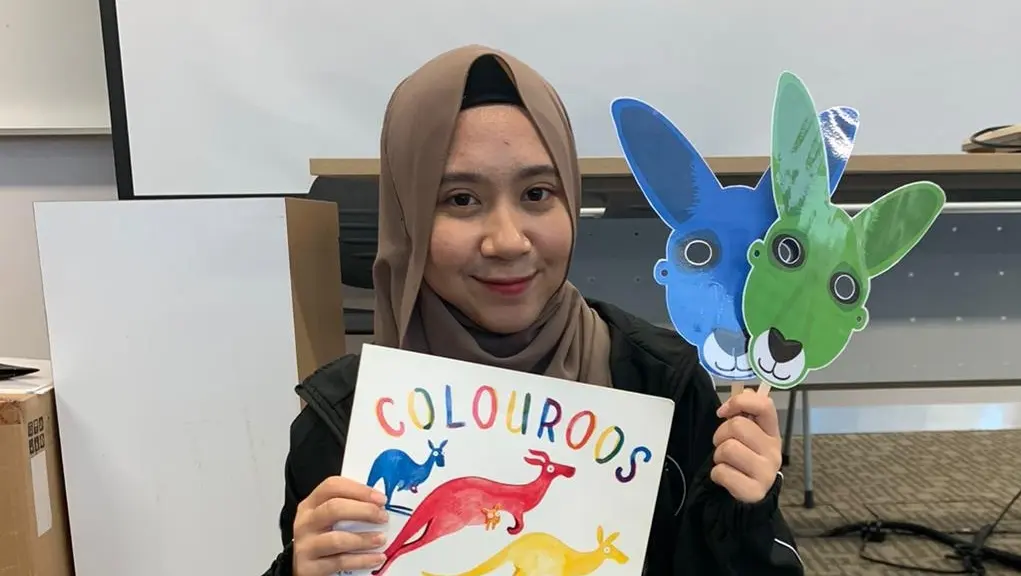
Language & Literacy
This module will introduce you to the foundational theories and philosophies of language and literacy development from birth to six years of age. You will learn to design, organise and evaluate literacy-rich environments that encourage language and literacy development in young children. You will find out how to identify suitable media for reading activities to develop an appreciation for literature in young children.
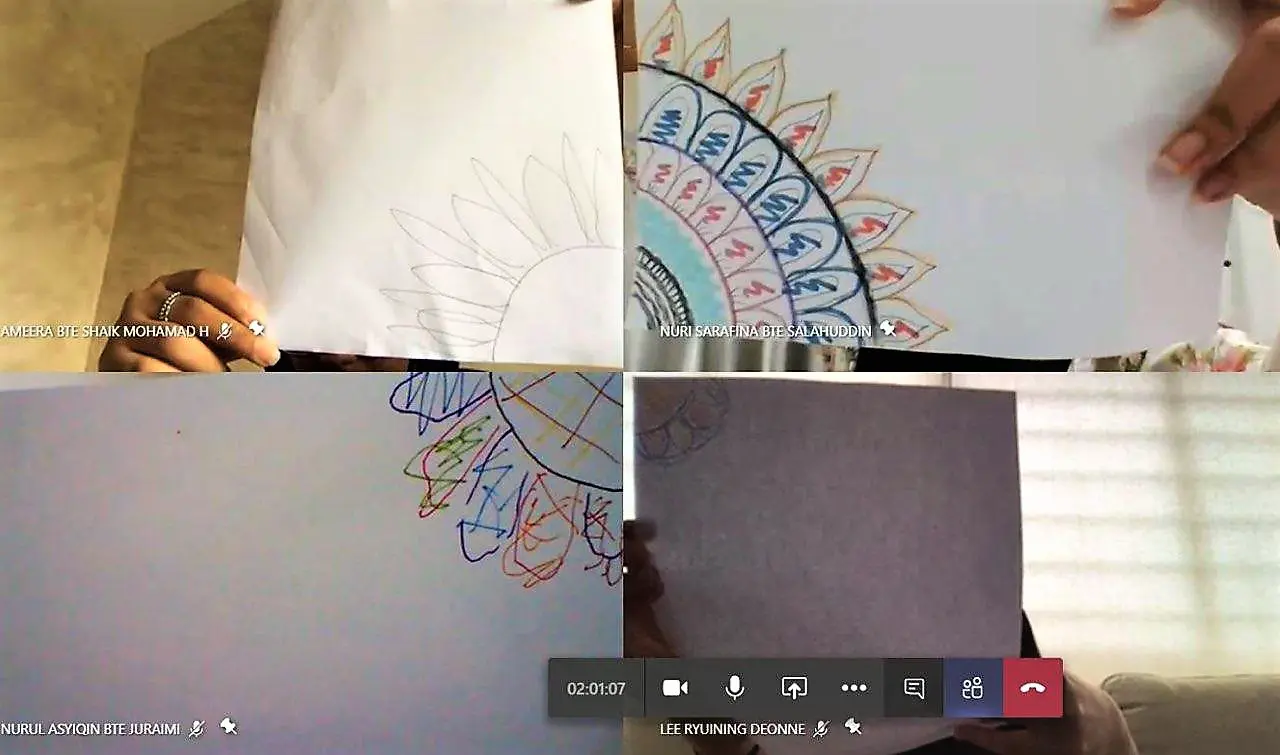
Aesthetics & Creative Expression
This module introduces you to an array of creative art forms and how to appreciate them. Understand the key role the Arts plays with early years settings by learning about progressive theories related to Arts education, aesthetics and creativity. Through both theory and experiential sessions, you will encounter the Arts first hand and will design Arts experiences that are developmentally appropriate for young children, meaningful and informed by practice.
- Year 1
- Year 2
- Year 3
- TPFUN
Build your knowledge with foundational modules such as Child Development and Language & Literacy. You get to apply and hone your skills alongside experienced teachers on a weekly basis.
| Subject Code | Subject | Credit Units | ||
|---|---|---|---|---|
| GED1001 | Practicum 1
This module provides students with opportunities to experience the practical aspects of working with young children aged 18-month to three in early years settings. It will support students’ learning in areas of child development, observation and documentation, safety, health, hygiene, nutrition. Students will observe and assist the host teacher in daily care routines and transitions as well as interact with children during play and other activities. |
2 | ||
| GED1101 | Child Development 1
This module introduces students to theories, principles and stages of child development, with an emphasis on birth to three years of age. There will be discussion on children’s personalities, temperaments, strengths and interests, as well as the factors contributing to children’s growth, well-being, learning and development. Students will learn to make use of various observation and documentation techniques to assess children so as to create a holistic picture of their experiences, development and learning, and to plan meaningful experiences for each child. |
4 | ||
| GED1104 | The Early Years: Theory to Practice
Students will be introduced to early childhood care and education landscape in Singapore, including developmentally appropriate practices, early childhood frameworks and code of ethics for early childhood professionals. Philosophy and practices of early childhood centres will be discussed. This module will support students’ learning in the area of children’s safety, health, hygiene, nutrition and socio-emotional well-being. The importance of play and how to incorporate it into daily care routines, transitions and interactions with children will be discussed. This module will also prepare students for the practical aspects of working as well as building trusting and respectful relationships with young children in early childhood settings with a focus on ages 18-month to three. In addition, students will engage in reflective writing on the roles of an early years educator. |
5 | ||
| GED1105 | Motor Skills Development
This module equips students with the knowledge, skills and guiding principles to help young children develop perceptual, fine motor and fundamental movement skills, consisting of locomotor, non-locomotor and object control skills, in a safe environment. Students will learn to observe, plan, implement and facilitate fun, meaningful and age appropriate indoor and outdoor play activities that combine fundamental movement skills and concepts. Students will also learn how to observe and assess children’s motor skills development. |
4 | ||
| GED1201 | Child Development 2
This module introduces the major theories of child development and their implications on practices in child-rearing and early care and education. The joint contributions of biology and environment to the various aspects of child development will be explored. Students will deepen their understanding of the holistic development of children through observation, recording and analysis of children’s physical, cognitive, social and emotional growth and development. This understanding will help students link theory to practice and guide them in the planning of learning experiences and techniques for behaviour guidance. The six learning areas of the Nurturing Early Learners Framework will also be discussed. |
4 | ||
| GED1206 | Language & Literacy
This module introduces students to the theoretical and philosophical underpinnings of language and literacy development from birth to six years of age, including trends and issues within our multilingual society. Students will learn to set up and evaluate the learning environment that helps facilitate language and literacy development. Students will also be trained to identify suitable resources, plan experiences for diverse learners and facilitate learning using appropriate techniques and learning technologies. The use of children’s literature to promote holistic development will be discussed. In addition, this module teaches students how to assess children’s progress and work with families to support their learning. |
6 | ||
| GED1103 | Aesthetics & Creative Expression
This module introduces students to an array of visual and performing arts and provides exposure for the appreciation of the creative art forms. In addition, students will develop an understanding about the importance of art experiences in children’s development and discuss issues related to the value of the arts, opportunities for growth and aesthetic development. Theories of creativity and stages of artistic development will also be discussed. Students will learn multiple approaches to engage young children in creative-arts expressions that are aesthetically rich and imaginative. Through both theory and experiential sessions, students will encounter the arts at first hand and will design art experiences that are developmentally appropriate, meaningful and informed by practice. |
4 | ||
| GED1204 | InfoComm Technology Essentials
This module develops e-competencies by equipping students with the essentials of InfoComm Technology (ICT) concepts and skills needed to use ICT applications for information research, organisation, collaboration and presentation. |
2 |

You will know how to help the child to become a curious learner and a problem solver through the approach of holistic development. Pick up skills in curriculum planning and bring them to the next level with field practicum.
| Subject Code | Subject | Credit Units | ||
|---|---|---|---|---|
| GED2205 | Curriculum Planning & Implementation
This module introduces students to the curriculum planning and assessment cycles. The main philosophical and pedagogical principles of various approaches and models of early childhood care and education will be discussed. Students will take reference from the NEL Framework to plan, implement and evaluate developmentally appropriate learning experiences for diverse preschool children that integrate different learning areas and learning dispositions. Students will also learn how to incorporate various types of play, learning technologies and teaching strategies in their planning. |
5 | ||
| GED2102 | Discovery of the World
This module provides an overview of how young children make sense of the world they live in and how they acquire knowledge and concepts. Students will learn to use the constructivist approach to foster process skills and engage children in exploration through field trips, simple investigations or experiments. Effective teaching techniques, the use of learning technologies and the setting up of a discovery centre that supports children’s inquiry and independent learning will also be discussed. In addition, developmentally and culturally appropriate learning goals and experiences for children from birth to six years of age will be addressed. |
4 | ||
| GED2203 | Working with the Exceptional Child
This module introduces students to various exceptional needs in young children including physical, cognitive, behavioural, emotional and sensory characteristics that make them different. Trends and issues in relation to inclusive practices and policies will be covered. Students will learn about the educator’s roles in an inclusive learning environment, especially in designing individualised learning plans and communicating with families. Students will also explore community resources and find out more about professionals that provide support for children with additional needs. |
4 | ||
| GED2104 | Early Numeracy
This module examines the theoretical framework which underpins young children’s learning of mathematics. Students will be introduced to the principles, knowledge and skills required to plan, implement and evaluate learning experiences that lay the foundations for children to become problem solvers and abstract thinkers. Students will learn to choose developmentally appropriate materials and resources, set up mathematically-rich environment, use effective teaching techniques to nurture children’s mathematical thinking and assess their learning. The use of interactive technology to teach numeracy will also be discussed. |
4 | ||
| GED2001 | Practicum 2
This practicum is for students to relate to practical aspects of working with children from three plus to six years of age in early childhood settings. Besides taking on teacher-assistant roles, the focus will be on setting up or reviewing the learning corners, engagement and facilitation in small group play and activities, as well as large/whole group teaching. Students will learn to plan a series of structured and unstructured sequential learning experiences for children according to the topic/theme of the practicum centre. The interests, needs and abilities of the group of children, the use of the environment and classroom management are considerations for planning. An integrated approach to the design and implementation of learning experiences that supports the six learning domains of the NEL Framework with the aim of enhancing and challenging children’s desire to explore, experiment and discover in a safe environment will be emphasised. Students will also engage in reflective writing on their roles as a professional early educator and their interactions with children. |
5 | ||
| GED2002 | The Preschool Years: Theory to Practice
This module equips students with the knowledge and skills to take on the role of a teacher assistant for Practicum 2. Students will learn about the principles to design and modify learning environments to support and facilitate the learning and development of preschool children with diverse needs through play and positive interactions. There will be discussion on how to organize daily schedule, set up learning areas with appropriate materials and incorporate the use of technology. Strategies on classroom and behaviour management will be introduced. This module also addresses ways to nurture children to become secure, emotionally connected, and confident individuals through developing their competencies in self-awareness, self-management, social awareness, relationship skills and responsible decision-making. In addition, students will reflect on their roles as a preschool educator and their interactions with children. |
6 | ||
| GED2003 | Infant & Toddler Learning Environment
This module introduces students to strategies to develop respectful, responsive and reciprocal relationships with children, through meaningful and positive interactions, based on their unique characteristics. Students will acquire knowledge and skills to set up or modify the learning environment to support the development of children from birth to three years of age, taking into consideration child development theories and stages of development. Students will also learn to work with families to plan transitions, child-centric experiences and establish routines. In addition, the principles and practices of children engagement and guidance will be covered. The role of assessment through purposeful observation and documentation of children’s behaviour will be emphasised. |
5 |
Deepen your knowledge in your area of interest with electives such as 2D & 3D Art or take up modules in the Visual Arts or Mother Tongue Language Teaching - Malay track. Put your skills and knowledge into practice on a six-month internship.
| Subject Code | Subject | Credit Units | ||
|---|---|---|---|---|
| GED3000 | Student Internship Programme
This structured programme is designed to link your learning with the real work environment. You will be placed in organisation(s) with opportunities to apply the concepts and skills acquired in the course of your study. Besides reinforcing technical concepts and mastering of skills in areas that you have been trained, the practical training will enable you to build important skills such as problem-solving, communication, teamwork, and to cultivate good attitude and a strong work ethic. |
22 | ||
| GED3001 | The Reflective Practitioner in Practice
This module equips students with the knowledge and skills to take on the role of a beginning early childhood educator. The roles of families, community partners and other professionals will be discussed. The students will learn how to engage and work collaboratively with these stakeholders to support children’s learning and development. They will also learn communication skills and ways to manage challenging issues in relation to working with children, colleagues and diverse families, taking reference from the code of ethics for early childhood professionals. Organisational privacy, confidentiality and data protection guidelines as well as stages of professional development, practitioner competencies and advocacy will be covered. In addition, students will acquire the concept of self-in-relation-to-others, reflect on their professional growth and interpersonal skills, as well as learn to exercise self-care, in order to enhance personal effectiveness. |
6 |
| Subject Code | Subject | Credit Units | ||
|---|---|---|---|---|
| GXA3001 | 2D & 3D Art
This module introduces students to the concept and practice of two and three dimensional representation and expression. In-depth studio practice and art critique sessions will give students the opportunity to acquire sound understanding of the use of art concepts and medium in effective and expressive representation. Additionally, meaningful art making plays an important role in promoting intellectual and emotional development in children and as such, pedagogical issues of facilitating artistic and aesthetic growth for the early years will be addressed. |
4 | ||
| GXN3006 | Assessment and Differentiated Instructions
This module builds on the understanding of diverse family circumstances children come from. It then provides an overview of the skills and techniques to identify, assess and support learning, behavioural, psycho-social and communication needs in young children who are at risk of developing learning and behavioural challenges. Using the linked system of assessment, planning, implementation, monitoring and evaluation, students will be introduced to an array of assessment tools and the approaches involved in differentiating instructions to address specific needs of children in a pre-school setting. |
4 | ||
| GXA3003 | Book Illustration & Design for Children
The emphasis of this module is on the practice and understanding of design and illustration techniques for children’s books. In this module, students will learn the art of children books design across time and culture. In addition, students will have the opportunities to explore and use various classical and contemporary design language, and illustration techniques to unpack the relationship between text and images. Through these experiences, students will explore their personal growth with understanding of their roles both as a visual storyteller and an early childhood educator. |
4 | ||
| GXX3001 | Drama for Pre-school Education
This module develops students’ critical thinking, imagination and creative expressions, as well as encourages them to be open to new ideas and novel experiences. Students will learn to plan and implement drama experiences for young children to guide them in developing confidence, empathy and communication skills. |
4 | ||
| GXX3002 | Children’s Literature
This module introduces students to children’s literature and how it has reflected cultural, social and ideological change. Students will examine the ways in which the child has been depicted in literature, learn to appreciate and critique different genre of children's books and be able to select age-appropriate books for young children. A study of children’s television and drama is included. |
4 |
| Subject Code | Subject | Credit Units | ||
|---|---|---|---|---|
| GXA3001 | 2D & 3D Art
This module introduces students to the concept and practice of two and three dimensional representation and expression. In-depth studio practice and art critique sessions will give students the opportunity to acquire sound understanding of the use of art concepts and medium in effective and expressive representation. Additionally, meaningful art making plays an important role in promoting intellectual and emotional development in children and as such, pedagogical issues of facilitating artistic and aesthetic growth for the early years will be addressed. |
4 | ||
| GXA3002 | Digital & New Media
This module exposes students to the foundational knowledge and skills of digital and new media in the field of art and design to enhance teaching and learning in early childhood settings. Through a combination of studio practice and theoretical discussions, students will develop insights and competencies in expressing and representing ideas and concepts through the use of digital tools. |
4 | ||
| GXA3003 | Book Illustration & Design for Children
The emphasis of this module is on the practice and understanding of design and illustration techniques for children’s books. In this module, students will learn the art of children books design across time and culture. In addition, students will have the opportunities to explore and use various classical and contemporary design language, and illustration techniques to unpack the relationship between text and images. Through these experiences, students will explore their personal growth with understanding of their roles both as a visual storyteller and an early childhood educator. |
4 |
| Subject Code | Subject | Credit Units | ||
|---|---|---|---|---|
| GXM3001 | Malay Grammar for Effective Communication
This module reinforces in students their core skills of listening, speaking, reading and writing in Chinese/ Malay/ Tamil. They will also learn the technicalities of the Chinese/ Malay/ Tamil language such as word classification, word formation and sentence building to enable them to communicate effectively with parents and other stakeholders in both verbal and written forms. |
2 | ||
| GXM3002 | Malay Language & Literacy
This module equips students with the knowledge and skills to develop language and literacy skills for young children that provide foundation for communication, reading and writing. Taking reference from the Singapore's national frameworks, students will learn to plan and facilitate children’s learning in a fun and interactive manner including the use of play, show-and-tell, songs and rhymes. Students will also be introduced to the different types of Chinese/ Malay/ Tamil children’s literature and learn how visual literacy can be used to support children’s learning. The module will also teach strategies for storytelling and story reading to provide enjoyable learning experiences for children. |
6 | ||
| GXM3003 | Teaching Malay through the Arts
This module introduces students to Chinese/ Malay/ Tamil cultural songs, musical instruments as well as traditional and folk art which are appropriate for young children. Students will explore the use of music, art and drama to develop children’s interest in learning the language, culture and heritage, as well as to reinforce and extend their learning. Students will also learn to use dramatisation to enhance children’s meaning-making of folklore and stories. |
4 |
* Choose any two Diploma Electives, or be part of the Visual Arts track or the Mother Tongue Language Teaching - Malay track.
You will also take this set of subjects that equips you with the crucial 21st-century life skills you need to navigate the modern world as an agile, forward-thinking individual and team player.
| Subject Code | Subject | Credit Units | ||
|---|---|---|---|---|
| GTP1103 | Effective Personal Leadership
This subject examines self-management and self-leadership through an exploration of values and beliefs, necessary for adapting to the world of work. It covers topics such as self-management and awareness, values and ethics, interpersonal communication, teamwork, resilience and emotional intelligence for enhancing leadership capabilities. These can significantly influence careers, relationships, and overall well-being. This subject is a reflective exploration of ‘leadership from within’ to have a greater awareness for the development of attributes required in an effective values-centred leader for oneself and for others. |
3 | ||
| GTP1203 | Career Readiness & Communication
This subject equips students with career preparation skills through better understanding of their career interests, values, skills and aspirations. Topics covered include personal branding, job search strategies, resume and cover letter writing, and interview techniques. In addition, students will gain awareness of workplace communication to succeed in their careers and achieve professional goals. |
3 | ||
| GTP1301 | Current Issues & Critical Thinking
This subject provides a comprehensive introduction to critical thinking by engaging students with current local and global issues. Students will learn to analyse diverse perspectives and uncover underlying assumptions in opinions, evaluate the credibility and bias of information sources, and construct well-reasoned, evidence-based arguments using established critical-thinking frameworks. They will also assess the societal, ethical, and personal implications of contemporary problems, and develop the ability to communicate their conclusions clearly and persuasively, employing appropriate digital tools to support their ideas. |
3 | ||
| INV1001 | Innovation & Entrepreneurship
The subject is designed for learners from all disciplines to embrace innovation in either their specialised field or beyond. Learners will be taught to apply the Design Thinking framework to develop problem statements, ideate and identify feasible solutions. Learners will be exposed to several tools for prototyping. In addition, commercial awareness will be imbued in learners through various innovation and entrepreneurship concepts or tools. This subject also prepares students to be self-directed lifelong learners who are digital and information literate. It nurtures communicative and collaborative citizens who can use objective analysis in problem-solving. |
2 | ||
| LSW1002 | Sports & Wellness
This subject reinforces the fundamental knowledge learnt on health, fitness, exercise and sports. Hands-on time will be allocated for a greater variety of fitness exercises and sports skills in a recreational setting. In addition, theoretical knowledge such as sports safety and risk management when participating in physical activities will be introduced. Guidance will be provided for improvement of physical fitness, acquiring of sports skills and relating theoretical knowledge to the physical activities. |
2 | ||
| TGS1002 | Global Studies
This subject provides essential skills and knowledge to prepare students for an overseas experience. They will examine the elements of culture and learn the key principles of cross-cultural communication. In addition, they will gain an appreciation and awareness of the political, economic, technological and social landscape to function effectively in a global environment. The subject prepares students to be responsible global citizens and leaders who can contribute to the global community through effective communication and collaboration. |
3 | ||
| TGS1003 | Sustainability & Climate Action
This subject prepares students to be responsible global citizens and future leaders who can contribute to the global community. It introduces the topics of sustainability and explores how human societies can act to build a sustainable future. This subject focuses on the impact of climate change, potential solutions to climate change, and the future of the green economy from global and local perspectives. |
3 |
| Subject Code | Subject | Credit Units | ||
|---|---|---|---|---|
| GTP1304 | Beyond the Classroom: Guided Learning
This subject empowers students to take charge of their personal learning in a chosen area of inquiry. Students will broaden or deepen their knowledge and skills, fostering a proactive approach to lifelong learning. Following a scaffolded process, students will design and execute a personalised learning plan that extends beyond traditional classroom walls. The journey culminates in a curated portfolio that highlights their achievements and growth. |
3 |
Graduation Requirements
TP Fundamentals subjects
min 20 credit units
Diploma Subjects - Core Subjects
92 credit units
Diploma Subjects - Elective Subjects
min 8 credit units
Total Credit Units Completed
min 120 credit units
Career Prospects
Graduates from this course can work as early childhood educators or work in children-related industries.
With further studies and training, a wide variety of options are available in the following areas:
- Child Support and Family Services
- Early Intervention, Special Needs Education
- Curriculum Development
- Play Therapy
- Teacher Education
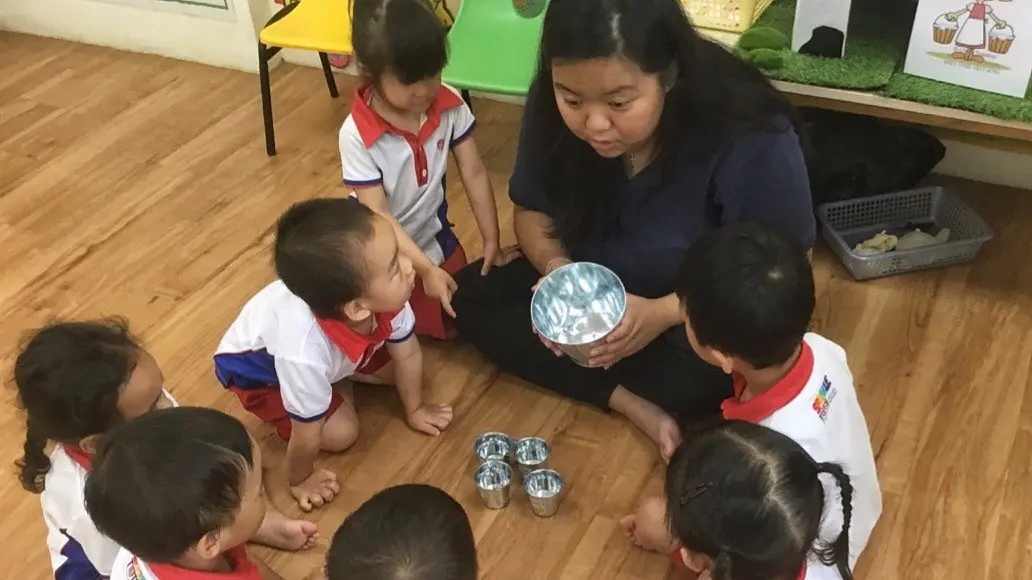
"During my time in the early childhood course, I have been exposed to a variety of modules, which allowed me to understand and gained great skills on being a preschool teacher.
Due to the nature of work in the preschool, it is an unavoidable situation where parents of the students would be involved. Family & Community Collaboration is one of the many modules that has helped me gain a better understanding of the different family structures and dynamics which gives me a better skill when communicating with families and involving them in the child’s education journey.
The Enhanced Internship Programme is a keystone and the highlight of the course that really allowed me to apply what I have learnt during the duration of my course. An opportunity to work with professionals in the field, being mentored by them was a real eye-opener and a great way to understand what it means to be an early childhood educator. All these factors prepared me adequately for my current job and taught me valuable life skills that I will continue to carry with me for a lifetime.
I had such a wonderful and fulfilling internship experience at the host preschool centre that I chose to continue working there as an English Language Preschool Teacher upon my graduation."
Owena Ho
English Language Preschool Teacher

"The early childhood course has helped to prepare me for real-life experiences as a teacher. I gained a greater appreciation of how children feel and express their emotions. I really liked doing the activities first-hand with my coursemates and pretending to be a child, which really helped to illustrate how things might be from their perspective. I particularly liked the many hands-on activities/projects assigned by the tutors as I am a practical type of person.
I have gained useful knowledge on how to recognise different behaviours and how to help children to resolve conflicts in a respectful manner. The module on Classroom Management taught me to use a positive approach in working with children in my classroom which helped me to be a better educator.
The group projects allowed me to be familiar with working in a team at my workplace. It encourages us to share our opinions and experiences, which is vital towards finding solutions in the centre. I really liked every aspect of this course, as it was really helpful with my practice when becoming a full-fledged teacher. The course helped me to gain confidence as well as meet other inspiring teachers who are as passionate as I am. It was a great 3 years!"
Malik Saiful Nizam B Rosli
English Language Preschool Teacher

"Being in an early childhood course has shaped my views in life today and I have never looked back ever since. One significant takeaway was how I have changed my perspectives towards children’s behaviours and even adult behaviours too, considering that psychology modules were included in this course. It has made me an open-minded person. The skills and strategies on managing children that were taught in this course has been not only applicable to my job, but also in my everyday life where I interact with my young nephews and nieces. I will never trade my experience in ECS with anything else."
Sofia Arissa Arman
English Language Preschool Teacher
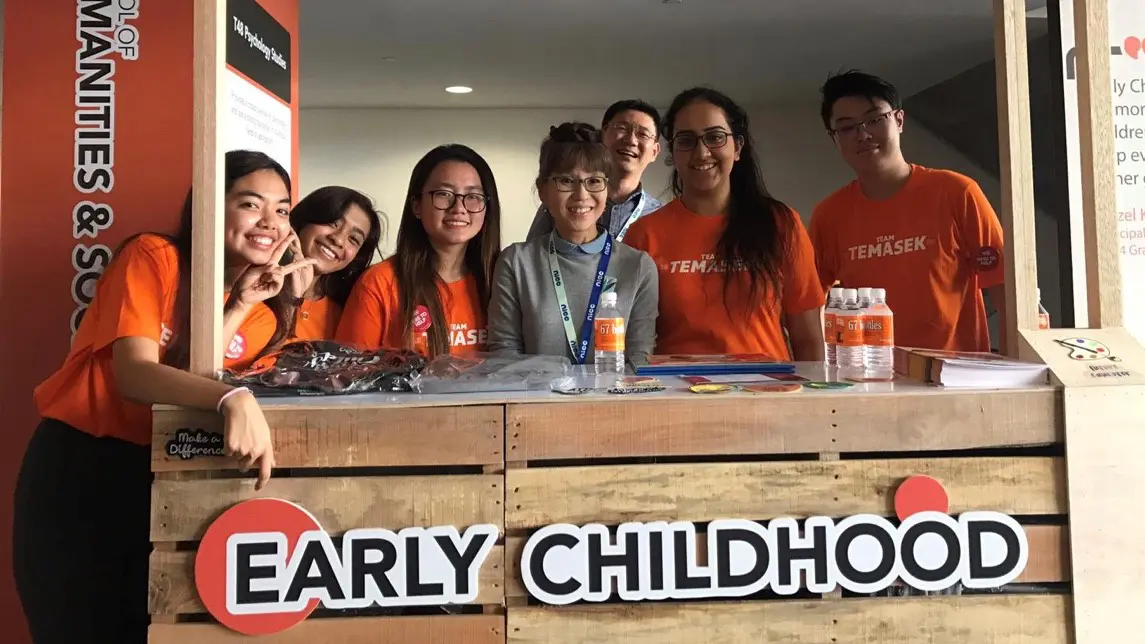
"My name is Rasnaam Kaur and I am a graduate of Early Childhood (EC), class of 2020. I chose this course to further my passion for teaching and love for children.
The EC course was holistic, covering curriculum to special needs and psychology modules. This gave me a deeper understanding of early education and prepared me for my six-month internship. During my internship I gained practical experience, such as managing classes, planning events and curriculum, designing learning environments, conducting portfolio observations and engaging with parents. This complemented everything I had learnt in theory. My principal, senior mentor, and student liaison officer guided me throughout the process.
In Temasek Polytechnic (TP), I enjoyed campus life such as being part of leading open houses, participating in school wide events, mentoring students, overseas exposure and cross-disciplinary subjects. The practical, academic and social experiences that TP created, also helped me develop relevant soft skills. These include managing and working collaboratively with various people, time management, confidence in public speaking, networking with professionals and taking up new challenges. The ECS faculty, from my care person to my lecturers and course director, was always there to support my learning and inspired me with their dedication. The friends I made from classes and school events, were my support system in school, and continue to be there for me today. This environment at TP, along with my parent’s and God’s blessings, allowed me to thrive and be the recipient of the TP graduation award, PCF Best Intern Award and various awards from the Ministry of Education.
I aspire to work my way up in the early education sector to become a principal and EC lecturer, either locally or overseas. To gain a global perspective, I came to Melbourne to get some experience in the industry. I will return in August to complete my degree with SUSS. My TP family has made a lasting impact on me and I treasure all the memories made. Though we are unable to commemorate our graduation traditionally during this lockdown, we still celebrated each other’s success. That’s what Humanities of Social Sciences (HSS) is; Heart, Spirit, Soul."
Rasnaam Kaur

"During the course of my time at HSS, I have learnt many skills that have not only helped me in my career but also in my life. I am currently working as an English teacher in a preschool, and I am teaching the Nursery 2 class.
My lecturers led by example, and have shown me how to let my children have the freedom to grow and learn independently. They have inculcated in me many values which I implement in my daily life, such as being positive and encouraging! This has impacted me a lot as I now try to inculcate the values I have in my students, by letting them have the freedom to grow and discover their environment.
Being in this course has taught me so much about the industry, and I am equipped with many skills and concepts that can be applied in my preschool, and also in life. I learnt how to be quick thinking and innovative, preparing me for unexpected situations that may happen in the daily classroom. Now, I know many different methods I can use to teach, and use creativity to make everyday learning fun for the children!"
Claire Oh
English Language Preschool Teacher

Contact
- hsshotline@tp.edu.sg
- Website: https://www.tp.edu.sg/hss
-
School of Humanities & Social Sciences
Temasek Polytechnic
East Wing Block 1A
21 Tampines Ave 1
Singapore 529757