Diploma in Veterinary Technology (T45)


Course Overview
Transform your passion for animals into a fulfilling and meaningful career path! This comprehensive course integrates theoretical knowledge with hands-on practice, empowering you to become a skilled veterinary technician. If you're harbouring aspirations in marine science or aquaculture, rest assured this program will also lay a solid foundation for your future endeavours in these fields.
Under the guidance of our expert team, you'll receive specialised training in veterinary care, mastering essential techniques such as animal husbandry, anaesthesia monitoring, and diagnostic testing at our fully equipped and licensed TP Animal Clinic & Wellness facility. The broad-based and well-structured curriculum goes beyond to cultivate your expertise in caring for aquatic animals and pets.
With growing awareness about animal welfare issues and our pursuit of advancing medical solutions for various ailments, you'll gain a scientific grasp of the applications of laboratory animal science, with an emphasis on responsible and humane animal care practices. Further enhancing your technical proficiency, a structured 5-month internship awaits you, either within local institutions or abroad. This immersive experience can take you to veterinary research institutions, aquaculture and marine animal facilities, veterinary clinics and hospitals.
Upon completing this comprehensive training, you'll be poised to tap into a wide array of career prospects spanning the aquaculture, veterinary care, and biomedical research sectors.
Get the opportunity to attain the below certification(s) throughout the course of your study:
- Responsible Care and Use of Fish (RCUF) certificate
- Responsible Care and Use of Laboratory Animals (RCULA) certificate

DIVERSE CURRICULUM
A broad-based curriculum enables you to join various sectors, from aquaculture, veterinary care and clinical practices to biomedical research.

REAL-WORLD EXPERIENCE
Get skills-based clinical training at our on-campus TP Animal Clinic & Wellness facility to build competencies in providing veterinary assistance in a real-world setting.
ADVANCED TECHNOLOGY
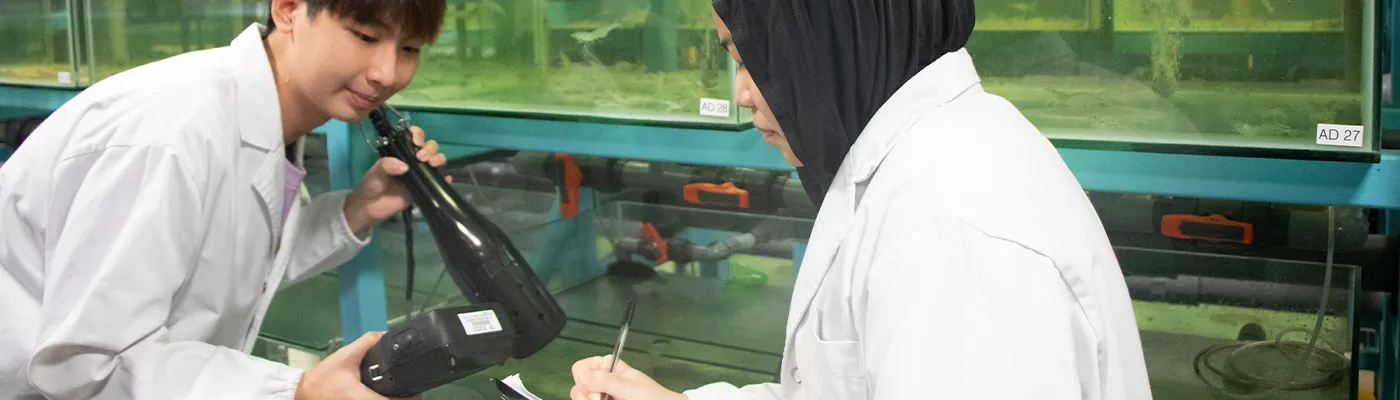
Gain valuable hands-on experiences in aquaculture through project-based learning at the Centre for Aquaculture & Veterinary Science – a purpose-built, innovative and technology-driven centre.


Entry Requirements
To be eligible for consideration for admission, applicants must obtain 26 points or better for the net ELR2B2 aggregate score (i.e. English Language, 2 relevant subjects and best 2 other subjects, including CCA Bonus Points) and meet the minimum entry requirements of this course. CCA cannot be used to meet the minimum entry requirements.
Subject
Grade
English Language (EL1)*
1-7
Mathematics (E or A)
1-6
Any one of the following subjects
- Biology
- Biotechnology
- Chemistry
- Food & Nutrition / Nutrition & Food Science
- Physics
- Science (Chemistry , Biology)
- Science (Physics, Biology)
- Science (Physics, Chemistry)
1-6
2026 Planned Intake
55
Net ELR2B2 aggregate range (2026 JAE)
3 - 9
Note: Applicants with complete colour appreciation deficiency are not eligible to apply.
Industry-relevant Aquaculture Projects
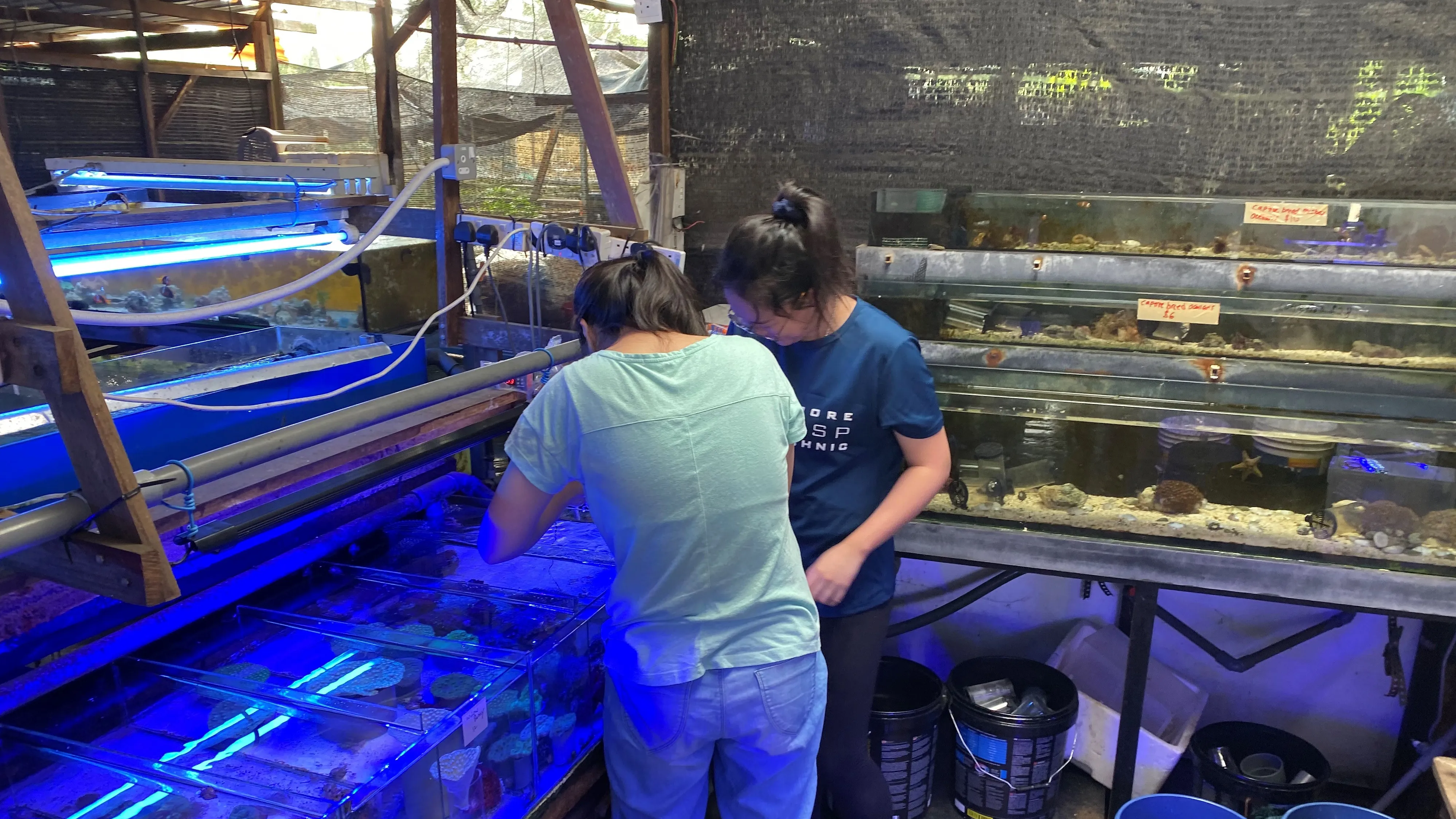
Our students collaborated with Aquarium Iwarna Pte Ltd to study the efficiency of feed capture among Scleractinian corals. The students performed coral fragmentation and transplantation at Iwarna’s coral farm, used lego kits to build artificial reef systems, carried out feeding trials at TP Centre for Aquaculture and Veterinary Science (CAVS) and observed feeding rates by live underwater recording.
Enhancing Veterinary Technology Education with Innovative Canine Teaching Models
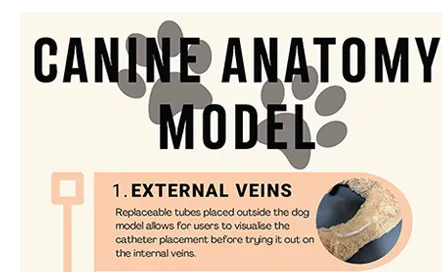
A group of students embarked on an innovative project to develop a canine teaching model using soft toys, aiming to enhance the learning experience for veterinary technology students. The project involved designing anatomically accurate plush dogs, complete with body parts to simulate various medical conditions and procedures. The initiative not only provided an engaging and practical learning tool but also enhanced students’ understanding of animal anatomy.
Community Outreach and Competitions
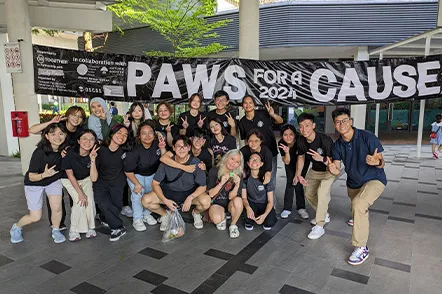
Join us in making a difference and advancing the cause of animal welfare and conservation! Through community outreach, students engage with local shelters, conservation parks, government agencies and animal welfare groups, applying their knowledge to improve animal care and educate the public. What's more, our students are given opportunities to participate in competitions that encourage innovation and collaboration, challenging students to develop creative solutions for pressing issues in science and technology. These activities not only enhance learning but also foster a sense of responsibility and leadership, preparing our graduates to be advocates and leaders in the veterinary field.
- Year 1
- Year 2
- Year 3
- TPFun
You will begin your journey by building a strong broad-based foundation through core subjects ranging from microbiology, cell biology, mathematics to conservation, nutrition and workplace safety.
| Subject Code | Subject | Credit Units | ||
|---|---|---|---|---|
| AMB1005 | Basic Microbiology
This subject investigates the important fundamentals of microbiology and its relevance to the food, biomedical, biotechnology, veterinary, pharmaceutical and chemical industries. It introduces the types of microorganisms and focuses on the growth, cultivation and control of these microorganisms. |
4 | ||
| AMT1004 | Cell Biology & Biochemistry
This subject introduces the biology of cells and the structure-function relationship of cells, cellular membranes and organelles. It covers basic concepts of organic chemistry and the structure-property relationship of essential biomolecules. Basic laboratory skills involving the study of cell structures with the use of cell staining and microscopy techniques, as well as basic biochemical analysis will also be introduced. |
5 | ||
| AMA1009 | Digitalisation in Applied Science
This subject introduces the basic concepts of data analytics, including data cleaning, processing, and visualisation using various productivity applications within the context of applied science. It also covers the use of computational thinking in developing simple applications. |
2 | ||
| APH1004 | Laboratory & Workplace Safety
This subject provides students with knowledge and skills to practise health and safety aspects at workplace and in the laboratories. It involves an introduction to Good Laboratory Practice, and the identification and classification of biological, chemical, physical and ergonomic hazards. The subject also covers the conduct of risk assessment, risk controls and monitoring as well as communication of these risks to all persons involved in compliance with the Workplace Safety and Health (Risk Management) Regulations. |
3 | ||
| AMA1003 | Mathematics for Applied Science
This subject is designed to focus on the concepts and applications of mathematics in chemical engineering, food and nutrition science, medical biotechnology, pharmaceutical and veterinary science contexts. Topics include units of measurement, functions, logarithm, differentiation and integration. |
3 | ||
| ACH1012 | Principles of Inorganic & Physical Chemistry
This subject covers fundamental principles of chemistry, chemical bonding, stoichiometry, solutions, rates and equilibria of chemical reactions, and properties of acids, bases and salts. |
4 | ||
| AMA1004 | Statistics for Applied Science
This subject provides you with the basic statistical techniques that are essential for your course of study. Topics covered include basic probability and distributions, basic statistics, sampling distribution, hypothesis testing, analysis of variance and chi-square testing. |
3 | ||
| AVT1006 | Animal Anatomy & Physiology
This subject covers an introduction to veterinary anatomy related to systematic, applied and comparative anatomy. It also covers veterinary physiology in relation to anatomy, using the basic principle of form and function, to explain the functions of the various organ systems. |
4 | ||
| APS1001 | Applied Project Skills
This subject covers the basics required in embarking on an applied science project, through the exposure to experiential and interdisciplinary learning as well as project management essentials. Students will develop critical thinking and communication skills and engage in team building and/or networking as they apply their learning in contextualised activities. |
3 |

Strengthen your knowledge of the key concepts and build skills in the veterinary-related content during your second year. You can dabble in a variety of subjects in aquatic and veterinary studies to discover your passion, and get involved with interesting field studies and community service projects designed to enhance your learning.
| Subject Code | Subject | Credit Units | ||
|---|---|---|---|---|
| AVT1013 | Animal Welfare and Conservation
This subject covers an introduction to the husbandry, care and behaviour of animals, with emphasis on domestic companion species. The fundamental principles and practical application will be elaborated in the sub-topics handling and restraint, animal housing and environmental conditions and animal management with respect to behaviour under different conditions. It also covers basic concepts of ecology and conservation. |
5 | ||
| AVT2035 | Clinical Diagnostic Techniques
This subject covers the basic knowledge and technical skills to perform various laboratory tests used for the evaluation of health and diseases in animals. It emphasizes the importance of sample collection, handling and processing for the study of animal disease. The processes and principles used to evaluate pancreatic, liver, kidney and other organ functions are also included. |
5 | ||
| AVT2037 | Clinical Practicum
This subject consolidates theoretical knowledge and practical nursing skills. It covers the core skill sets of veterinary technicians to manage the daily operations of a veterinary clinic, including administrative and nursing procedures, safety standards, and laboratory procedures. |
6 | ||
| AVT2038 | Professional Veterinary Practice
This subject covers the roles and responsibilities of veterinary technicians, as well as the ethical and the professional requirements of a veterinary practice. The subject also introduces students to business start-up basic concepts and veterinary legislation. Emphasis will also be given to topics on professional communication skills, compassion fatigue, and the relationship of One Health and veterinary practice. |
4 | ||
| AVT2032 | Principles of Animal Healthcare and Disease
This subject covers fundamental concepts in common diseases and health in companion animals. The causes, main clinical signs, diagnostic tests, treatments and prevention measures for common animal diseases will be discussed. |
4 | ||
| AVT2033 | Veterinary Anaesthesia and Pharmacology
Students will learn the basic concepts of pharmacology and how it applies to the use anaesthetic, analgesic and antimicrobial drugs in veterinary patients at clinical setting. Students will also be taught relevant skills in anaesthesia, including the role of the veterinary technician in anaesthesia. |
5 | ||
| AVT2036 | Veterinary Nursing Practice
This subject introduces veterinary nursing practices which include areas of medical, theatre and radiology nursing. It covers the basic knowledge and technical skills required to perform routine nursing tasks such as caring for warded patients, preparing for surgery, and carrying out diagnostic imaging tests. |
5 | ||
| AVT2031 | Animal Genetics & Breeding
This subject is to provide basic theoretical knowledge and laboratory techniques in molecular genetics. It covers foundational concepts and their applications in genetics, including selective breeding, heredity, the nature of deoxyribose nucleic acid (DNA), the central dogma of molecular biology and genomics. |
4 |
In your third year, you will gain practical work experience through your choice to specialise in either fields of aquaculture or veterinary. You can look forward to exciting internships in various industries such as research laboratories, fish farms, wildlife reserves, veterinary clinics and universities.
| Subject Code | Subject | Credit Units | ||
|---|---|---|---|---|
| AMP3022 | Major Project
This subject provides a framework for you to solve practical problems, conduct research work and/ or develop studies, through a self-managed project. The scope of the subject includes project proposal, investigative studies, analysis, interpretation of results, written report, and presentation. |
6 |
Diploma Elective Cluster Subjects
| Subject Code | Subject | Credit Units | ||
|---|---|---|---|---|
| AVT3017 | Aquaculture Science & Technology
This subject covers basic understanding of food security, the regulations from Singapore Food Agency (SFA) and the roles it plays in aquaculture product quality and safety, basic engineering principles, system designs and culture systems applicable for aquaculture. Experimental design in the reproduction techniques of aquatic animals (mainly finfish, mollusks and crustaceans), the management of farm practices, and key concepts in sustainable aquaculture will be introduced. Safety measurements and controls such as Hazard Analysis and Critical Control Points (HACCP), product certification at international, regional, and national levels will also be introduced. The management of aquaculture product quality and safety involving scientists, policymakers, farmers, stakeholders, and consumers to ensure sustainability will be discussed. Hands-on training on good aquaculture practices and farm operation, handling and husbandry for aquatic animals will also be emphasized. |
9 |
| Subject Code | Subject | Credit Units | ||
|---|---|---|---|---|
| AVT3016 | Animal Science & Technology
This subject provides a comprehensive coverage of the diverse field of animal science and technology. It encompasses the study of laboratory animal care, health, welfare, and their applications in biotechnology. Key topics include the operation and maintenance of animal facilities, animal disease prevention and control, animal breeding programs, fundamental principles of reproduction, and reproductive technology. Through a blend of theoretical knowledge and practical applications, integration of environmental, genetic, and physiological considerations will be explored to identify and analyse factors influencing successful breeding and reproduction in laboratory animals within a research context. |
9 |
| Subject Code | Subject | Credit Units | ||
|---|---|---|---|---|
| ASM3001 | Marketing of Science Products and Services
The subject covers marketing concepts, code of ethics, guidelines and regulations governing the sales and sustainable marketing of products and services that can be applied in various sectors of the applied science industry such as life science, chemical, pharmaceutical, food, and pet industries. |
5 | ||
| BSE2001 | Business Development
This subject is designed to equip students with the essential skills and knowledge to identify and seize business opportunities, build and maintain strategic partnerships, and foster sustainable growth. The subject covers key aspects such as opportunity identification, relationship management, communication skills, negotiation skills, and cultural competence. Through a combination of theoretical insights and practical applications, students will learn to navigate the complexities of business development in a dynamic and globalised market. |
4 |
| Subject Code | Subject | Credit Units | ||
|---|---|---|---|---|
| AWB3001 | Guided Work-based Learning
This is a competency-based subject that aims to develop students’ industry-specific knowledge, skills and attitudes through a structured on-the-job training programme. Students will work with company supervisors to develop and execute a learning plan based on their job role(s), and monitor and reflect on their learning progress. Students’ acquisition of the essential knowledge and technical and generic skills will be evaluated through various assessment methods which may include competency tests, completion of relevant certification courses/training programs. |
9 |
| Subject Code | Subject | Credit Units | ||
|---|---|---|---|---|
| EMA3002 | Modelling & Analysis
The main objective of this subject is to provide students firm foundations of single variable calculus so that they can apply calculus to model, solve and analyse applied math problems. It aims to motivate students on the importance of calculus through a plethora of applications in engineering, physical and biological sciences, computer science, finance, economics, probability and statistics and other topics. On top of the basic concepts, techniques and applications of two branches of calculus - differentiation and integration, students will also learn to use simple software to implement numerical methods in calculus. |
4 | ||
| ESC3002 | Physical World
This subject provide students with the ability to understand and explain the inner mechanism of the physical world based on the principles of mechanics and thermodynamics. It aims to help students appreciate the beauty of physics and enable them to apply key concepts learnt to evaluate and address physics-based problems to make a positive impact on the world. By using concepts established through simplified mathematical models, reverse engineering case studies and experiential learning through hands-on demonstrations, connections between physics concepts and theoretical models are reinforced with practice. |
4 | ||
| ESE3015 | Computational Thinking for Design
This subject covers programming both in the architectural design and computing contexts targeted at novice programmers. It will introduce students to programming and design computing skills that are essential for their studies. Students will learn visual programming and python programming together with design concepts, and will apply these skills in related projects. |
4 | ||
| ECS3003 | Global Humanities: Literature, Philosophy & Ethics
This subject examines stories as a way to understand ourselves and our world. Some of these stories have endured for centuries and spread far beyond their locus of origin. They raise questions that resonate with our lives even today. This subject will equip you with critical reading, thinking, and writing skills by exploring different ways of reading and interpreting classic texts. You will learn to identify the connections between various texts and between thinkers in history – ranging from those in ancient China and Greece to those in contemporary Singapore. |
4 |
You will also take this set of subjects that equips you with the crucial 21st-century life skills you need to navigate the modern world as an agile, forward-thinking individual and team player.
| Subject Code | Subject | Credit Units | ||
|---|---|---|---|---|
| GTP1103 | Effective Personal Leadership
This subject examines self-management and self-leadership through an exploration of values and beliefs, necessary for adapting to the world of work. It covers topics such as self-management and awareness, values and ethics, interpersonal communication, teamwork, resilience and emotional intelligence for enhancing leadership capabilities. These can significantly influence careers, relationships, and overall well-being. This subject is a reflective exploration of ‘leadership from within’ to have a greater awareness for the development of attributes required in an effective values-centred leader for oneself and for others. |
3 | ||
| GTP1203 | Career Readiness & Communication
This subject equips students with career preparation skills through better understanding of their career interests, values, skills and aspirations. Topics covered include personal branding, job search strategies, resume and cover letter writing, and interview techniques. In addition, students will gain awareness of workplace communication to succeed in their careers and achieve professional goals. |
3 | ||
| GTP1303 | Current Issues & Critical Thinking
This subject provides a comprehensive introduction to critical thinking by engaging students with current local and global issues. Students will learn to analyse diverse perspectives and uncover underlying assumptions in opinions, evaluate the credibility and bias of information sources, and construct well-reasoned, evidence-based arguments using established critical-thinking frameworks. They will also assess the societal, ethical, and personal implications of contemporary problems, and develop the ability to communicate their conclusions clearly and persuasively, employing appropriate digital tools to support their ideas. |
4 | ||
| INV1001 | Innovation & Entrepreneurship
The subject is designed for learners from all disciplines to embrace innovation in either their specialised field or beyond. Learners will be taught to apply the Design Thinking framework to develop problem statements, ideate and identify feasible solutions. Learners will be exposed to several tools for prototyping. In addition, commercial awareness will be imbued in learners through various innovation and entrepreneurship concepts or tools. This subject also prepares students to be self-directed lifelong learners who are digital and information literate. It nurtures communicative and collaborative citizens who can use objective analysis in problem-solving. |
2 | ||
| LSW1002 | Sports & Wellness
This subject reinforces the fundamental knowledge learnt on health, fitness, exercise and sports. Hands-on time will be allocated for a greater variety of fitness exercises and sports skills in a recreational setting. In addition, theoretical knowledge such as sports safety and risk management when participating in physical activities will be introduced. Guidance will be provided for improvement of physical fitness, acquiring of sports skills and relating theoretical knowledge to the physical activities. |
2 | ||
| TGS1002 | Global Studies
This subject provides essential skills and knowledge to prepare students for an overseas experience. They will examine the elements of culture and learn the key principles of cross-cultural communication. In addition, they will gain an appreciation and awareness of the political, economic, technological and social landscape to function effectively in a global environment. The subject prepares students to be responsible global citizens and leaders who can contribute to the global community through effective communication and collaboration. |
3 | ||
| TGS1003 | Sustainability & Climate Action
This subject prepares students to be responsible global citizens and future leaders who can contribute to the global community. It introduces the topics of sustainability and explores how human societies can act to build a sustainable future. This subject focuses on the impact of climate change, potential solutions to climate change, and the future of the green economy from global and local perspectives. |
3 | ||
| ASI3035 | Student Internship Programme
This structured programme is designed to link your learning with the real work environment. You will be placed in organisation(s) with opportunities to apply the concepts and skills acquired in the course of your study. Besides reinforcing technical concepts and mastering of skills in areas that you have been trained, the practical training will enable you to build important skills such as problem-solving, communication, teamwork, and to cultivate good attitude and a strong work ethic. |
12 |
| Subject Code | Subject | Credit Units | ||
|---|---|---|---|---|
| GTP1304 | Beyond the Classroom: Guided Learning
This subject empowers students to take charge of their personal learning in a chosen area of inquiry. Students will broaden or deepen their knowledge and skills, fostering a proactive approach to lifelong learning. Following a scaffolded process, students will design and execute a personalised learning plan that extends beyond traditional classroom walls. The journey culminates in a curated portfolio that highlights their achievements and growth. |
3 |
Graduation Requirements
Cumulative Grade Point Average
min 1.0
TP Fundamentals Subjects
min 32 credit units
Diploma Core Subjects
73 credit units
Elective Subjects
min 9 credit units
Total Credit Units Completed
min 114 credit units
Veterinary Technician
Assists veterinarians with diagnostic tests, provides general care for animals including patient monitoring and health checking, and interacts with pet owners.
Veterinary Technician
Assists veterinarians with diagnostic tests, provides general care for animals including patient monitoring and health checking, and interacts with pet owners.
Veterinary Technologist
Provides veterinary care and assists in veterinary procedures, including but not limited to anesthesia, diagnostic procedures, sample collection, imaging, necropsy, and laboratory analysis.
Veterinary Technologist
Provides veterinary care and assists in veterinary procedures, including but not limited to anesthesia, diagnostic procedures, sample collection, imaging, necropsy, and laboratory analysis.
Animal Management Officer
Ensures positive welfare for animals through enrichment, exercise, socialisation, play and training, and conducts behaviour and welfare assessment of animals.
Animal Management Officer
Ensures positive welfare for animals through enrichment, exercise, socialisation, play and training, and conducts behaviour and welfare assessment of animals.
Aquarist
Upkeeps aquarium exhibits and provides care for marine species, such as feeding, monitoring fish health, and monitoring water quality.
Aquarist
Upkeeps aquarium exhibits and provides care for marine species, such as feeding, monitoring fish health, and monitoring water quality.
Aquaculture Technologist/ Technician
Assists in hatchery management, equipment design, R&D, harvesting, processing and shipment of seafood products in freshwater and marine farms.
Aquaculture Technologist/ Technician
Assists in hatchery management, equipment design, R&D, harvesting, processing and shipment of seafood products in freshwater and marine farms.
Conservation Educator
Manages conservation awareness events such as talks, workshops, and guided walks, helps with volunteer activities and conservation projects.
Conservation Educator
Manages conservation awareness events such as talks, workshops, and guided walks, helps with volunteer activities and conservation projects.
Laboratory Officer/ Technologist
Performs administrative and technical duties required in the processing and disposal of laboratory samples, and assists in laboratory quality assurance duties.
Laboratory Officer/ Technologist
Performs administrative and technical duties required in the processing and disposal of laboratory samples, and assists in laboratory quality assurance duties.
Pet Care Advisor
Assists customers on their concerns pertaining to pet care and recommends solutions based on indications, supports day-to-day business operations of retail store.
Pet Care Advisor
Assists customers on their concerns pertaining to pet care and recommends solutions based on indications, supports day-to-day business operations of retail store.
Animal Welfare Educator
Plans and conducts humane education programs and activities that promote public awareness of compassion and respectful treatment of animals.
Animal Welfare Educator
Plans and conducts humane education programs and activities that promote public awareness of compassion and respectful treatment of animals.
Animal Health Inspection Officer at animal welfare organizations or government agencies
Ensures all local animal facilities are operating in compliance with government regulations regarding animal health, safety, and welfare.
Animal Health Inspection Officer at animal welfare organizations or government agencies
Ensures all local animal facilities are operating in compliance with government regulations regarding animal health, safety, and welfare.

Outstanding Projects
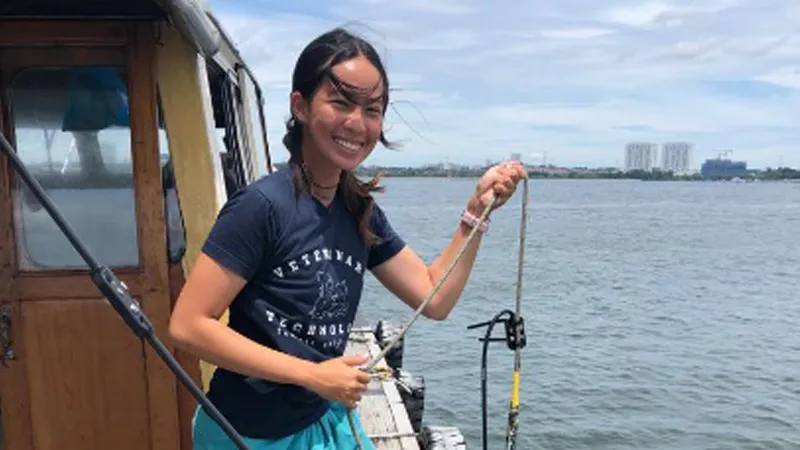
Our Year 3 Diploma in Veterinary Technology student Angel, specializing in the Aquaculture elective cluster partnered with DishTheFish Pte Ltd for a TP-funded research project to create a sustainable feed formulation. This initiative addresses two pivotal aquaculture issues: the soaring costs and unsustainable reliance on fishmeal, and increased food waste. By repurposing fish entrails and fruit waste, Angel successfully formulates a well-balanced feed for omnivorous fish, promoting food and environmental sustainability.
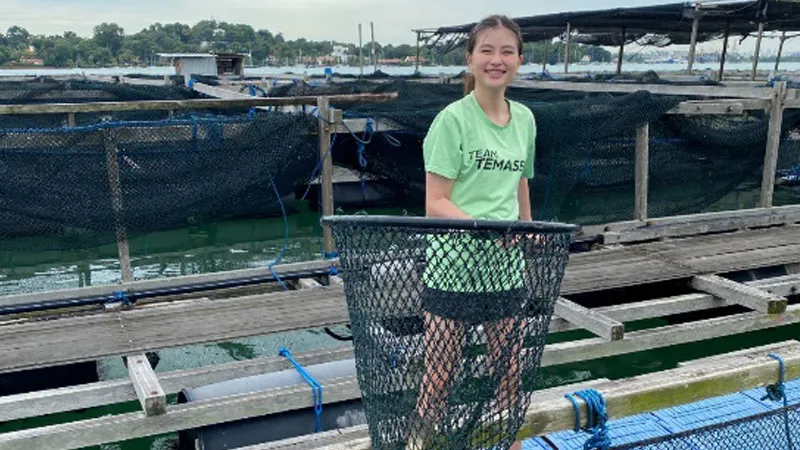
Our Year 3 Diploma in Veterinary Technology student, Jolin specializing in the Aquaculture elective cluster collaborated with The Metropolitan Fishery Group to research cost-effective methods for combating ectoparasites and bacteria in local fish farms. Her study assessed the correlation between bacterial and parasitic infections and the efficacy of the 1-4-7 treatment. The findings from this research carry significant implications for cost reduction and predicting parasitic infestation and bacterial growth in fisheries.
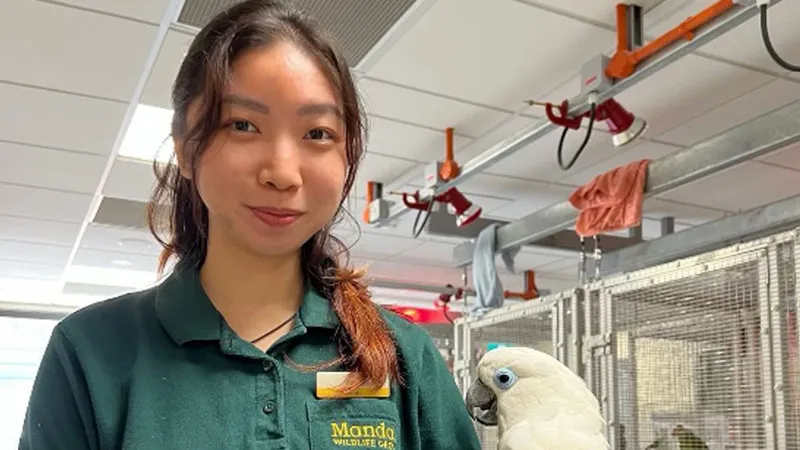
Our Year 3 Diploma in Veterinary Technology student Mendoza, specializing in the Veterinary elective cluster conducted a collaborative research project with Bird Paradise at the Mandai Wildlife Reserve in Singapore, analyzing the impact of recent inter-aviary transfers. She collected and compared clinical records of avian patients with traumatic injuries at the facility. Additionally, Mendoza cross-referenced this data with the Zoological Information Management System (ZIMS) for a comprehensive evaluation of the health outcomes associated with these transfers.

“The course taught me the foundational skills required for both the aquaculture and veterinary industry. During internship and clinical rotations, it was a great experience as I learnt more about both industries, worked with different people and used the skills I have learnt from the course.”
Deborah Chua
Executive,
Aquaculture Innovation Centre
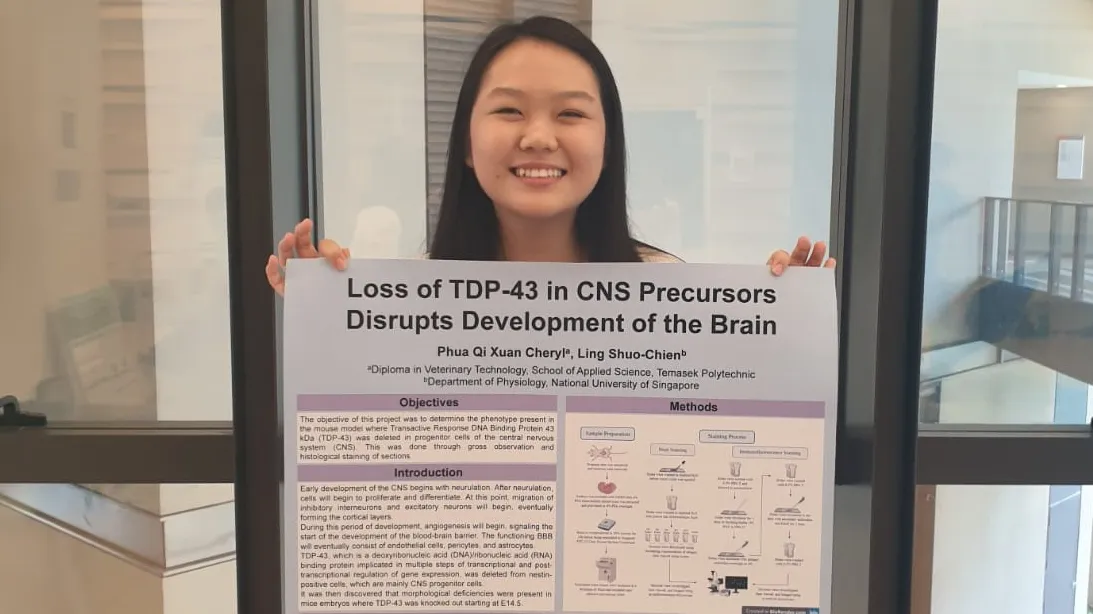
"The broad spectrum of skills taught in the course has ingrained skills and knowledge which are extremely beneficial as a laboratory technician who does animal work and thus made it easier to transition from a student to a member of the workforce."
Cheryl Phua
Laboratory Technologist, NUS Department of Physiology
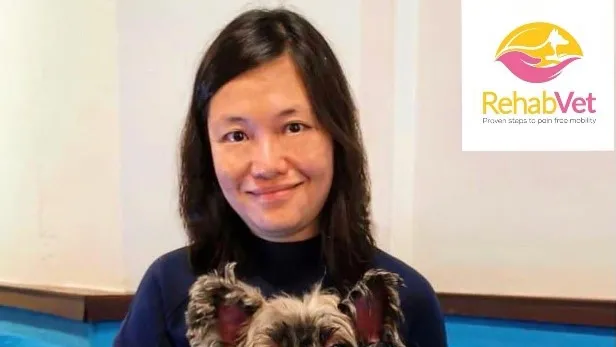
"The course helped me to gain a good foundation in animal science and animal care. It also introduced me to the animal care industry through practical attachments and volunteer opportunities. I even got to work with dolphins & marine life during my internship. I would say TP provided the first stepping stones that eventually led me to discover my passion in the field of small animal hydrotherapy and rehabilitation."
Sharon Wong
Hydrotherapist, RehabVet


What is this course about?
- What is this course about?
This Diploma in Veterinary Technology will train you to be a Veterinary Technician or Nurse in veterinary care that supports the veterinary industry. You will work in places such as a veterinary hospital or general practice clinic, conservation park, or research institution. As a graduate, you will also be able to work with aquatic species upon completing the 3rd year electives in aquaculture.
Should I join this diploma if I want to be a veterinarian?
- Should I join this diploma if I want to be a veterinarian?
This Diploma in Veterinary Technology is NOT a pathway to pursue the Doctor of Veterinary Medicine or become a registered Veterinarian.
For students aspiring to become veterinarians, we strongly recommend considering the Singapore-Cambridge GCE A-Level, which are internationally recognised by universities. The GCE A-Levels pathway typically offers a shorter duration compared to our comprehensive 3-year polytechnic training. Alternatively, GCE 'O' levels graduates may opt for enrollment in Foundation Programmes or Preparation Courses that can pave their way to Veterinary Science (BSc, BVMS) programmes offered by overseas universities.
We strongly advise seeking direct consultation from the respective universities for guidance before making any decisions.
Besides the Joint Admissions Exercise (JAE), is there any other way I can apply for this course?
- Besides the Joint Admissions Exercise (JAE), is there any other way I can apply for this course?
All fresh “O” Level school leavers will have to go through the JAE. Others can apply through Direct Admission Exercise (DAE) and Early Admission Exercise (EAE). For admission related enquiries, please call our Admission Office at 6780 4201 or email to Admissions@tp.edu.sg
Could Temasek Polytechnic provide a list of universities that offer advanced standing for graduates from the Diploma in Veterinary Technology programme?
- Could Temasek Polytechnic provide a list of universities that offer advanced standing for graduates from the Diploma in Veterinary Technology programme?
While we do not provide specific information on universities offering advanced standing, as this can vary due to non-periodic changes in course curriculum at Temasek Polytechnic (TP) and partner universities, we are proud to note that many of our diploma graduates with higher aspirations have successfully gained admission to various degree programmes, both locally and overseas.
It is important to recognise that university admissions are primarily determined by academic achievements and fair competition among all eligible candidates. We strongly advise seeking direct consultation from the respective universities for guidance before making any decisions.
Contact
- aschotline@tp.edu.sg
- Website: https://www.tp.edu.sg/asc
-
School of Applied Science
Temasek Polytechnic
East Wing Block 1A
21 Tampines Ave 1
Singapore 529757