/eng-t29 banner.webp)
Diploma in Architectural Technology & Building Services (T29)


Course Overview
A building's design can play a part in combating climate change. So can you!
This pioneering multi-disciplinary course is designed to harness technology and digitalisation to shape the smart, sustainable buildings of tomorrow. You will build a strong foundation in architectural design, building systems, digital delivery management, and computational design — key tools for modern architects and building engineers today.
As you progress, you will refine your critical thinking by exploring advanced building simulations and energy management tools, which will enable you to assess and optimise design performance for high-performance buildings.
You will also have the opportunity to specialise in areas such as Environmental Sustainability, where you will study the economic benefits of enhancing energy performance and gain expertise in selecting sustainable materials for green buildings.
In short, this diploma will equip you with comprehensive knowledge in integrating architecture, environmental engineering, and sustainability practices throughout the entire lifecycle of a building. With this advanced skill set, you will be well-equipped to lead the creation of greener, more resilient built environments, driving meaningful progress and innovation in the industry!
Get the opportunity to attain the below certification(s) throughout the course of your study:
- Fire Safety Manager certification from SCDF
- Digital Delivery Management Certification- Tier 4 (Provisional) from Building Smart Singapore
You can also apply for scholarships that are only available to students of this diploma, such as the City Developments Ltd (CDL) Scholarship.
To download a copy of our 4-page course brochure, click here.


WORK ON ‘LIVE’ INDUSTRY PROJECTS
Collaborate, interact and apply your knowledge and skills along with industry experts and see your ideas come alive even before you graduate!

MAKE A DIFFERENCE TO THE GREEN ECONOMY
Aim to lower the carbon emission of building systems, design green facilities, and contribute towards our nation’s net-zero emission goal.

SECURE A SMART & DIGITAL FUTURE
Learn to innovate with a Digital Delivery Management Certification and play your part in establishing a smart technology-driven built environment.


Watch a 1-minute video about this Diploma:

/eng-t29-1.webp)
Smart and Digital Architecture
Equip yourself with the latest smart technology and digital practices in architectural design that meets green regulatory requirements.
/eng-t29-2.webp)
Sustainability
Acquire fundamental knowledge and skills on sustainability, such as bioclimatic simulations, carbon management, and environmental impact analysis for low carbon developments.
/eng-t29-3.webp)
Green Project Management
Develop multidisciplinary skill-sets in technical facility systems, data analytics and automation, which optimise design performance and energy efficiency.
/STMPIcon(no-text)(July25).webp)
/OELPIcon(no-text)(July25).webp)
/OTEIcon(no-text)(July25).webp)
Entry Requirements
To be eligible for consideration for admission, applicants must obtain 26 points or better for the net ELR2B2 aggregate score (i.e. English Language, 2 relevant subjects and best 2 other subjects, including CCA Bonus Points) and meet the minimum entry requirements of this course. CCA cannot be used to meet the minimum entry requirements.
Subject
Grade
English Language (EL1)*
1-7
Mathematics (E or A)
1-6
Any one of the following subjects
- Biology
- Biotechnology
- Chemistry
- Computing/Computer Studies
- Design & Technology
- Electronics/Fundamentals of Electronics
- Physics
- Science (Chemistry, Biology)
- Science (Physics, Biology)
- Science (Physics, Chemistry)
1-6
2026 Planned Intake
75
Net ELR2B2 aggregate range (2026 JAE)
8 - 16
Note: Applicants should not be suffering from severe vision impairment.
* SPM / UEC holders must have a minimum of grade 6 for the Bahasa Inggeris (English Language) subject.
- Year 1
- Year 2
- Year 3
- TPFUN
Establish a strong foundation in architectural design, digital delivery management, and computational design — key tools for modern architects and building engineers.
| Subject Code | Subject | Credit Units | ||
|---|---|---|---|---|
| ESE1009 | Artificial Intelligence in Engineering
This subject will cover the key concepts of Artificial intelligence (AI), Generative AI, and foundation models to prepare engineers for a future where AI applications will be pervasive. It will include considerations for the ethical and safe use of AI, as well as the impact of AI on engineering applications through real-world case studies. It will also cover essential AI techniques and Prompt Engineering skills, providing the foundation to leverage on AI for innovative solutions in engineering domains. The subject will provide skills practice for applications of AI for data augmentation, data analysis, prototyping and simulation, problem-solving and optimisation. |
2 | ||
| EGB2007 | Climate Responsive Design Simulation
This subject focuses on the use of Computational Fluid Dynamics (CFD) tools to perform Natural Ventilation (NV) and Wind Driven Rain (WDR) simulations. Sustainable building technologies such as solar modelling and Environmental Thermal Transfer Value (ETTV) calculation for various passive design approaches will equip you with hybrid environmental design and engineering skills. |
4 | ||
| ESE1006 | Computer Programming for Problem Solving
This subject covers the process of decomposing a problem into a sequence of smaller abstractions. The abstractions are implemented in software in a structured top-down approach. Software implementation includes the process of designing, writing, testing, and debugging program code. |
4 | ||
| EBD1008 | Digital Modelling For Architecture
The module introduces the principles of architectural drawing and visualisation using relevant building information modelling (BIM) tools for representation. You will learn to apply these tools to develop schematic building designs based on local building regulations, construct 3D-BIM models with architectural elements and prepare documentation for planning submissions. |
4 | ||
| EMA1003 | Engineering Mathematics 1
This subject teaches pre-calculus techniques required for an engineering course. It trains you in engineering problem-solving approaches using the appropriate mathematical tools. Topics such as simultaneous equations, matrices, trigonometric, exponential and logarithmic functions, complex numbers and vectors will be covered. |
4 | ||
| EMA1002 | Engineering Mathematics 2
This subject introduces the basic concepts of calculus and statistical method to test a hypothesis. Basic concepts in calculus include limits, derivatives and integrals. Applications of the derivative and integrals in engineering will be discussed. Basic statistical method in hypothesis testing includes normal distribution, confidence interval of population mean and procedure to test hypothesis for a claim made about a population mean. |
4 | ||
| ESC1004 | Engineering Physics
This subject covers a spectrum of fundamental physics laws and concepts applicable to the scope of engineering physics. It covers a few core areas including Mechanics, Energy, Thermal Physics, Electromagnetism, Waves & Optics and Materials. This subject provides a foundation for a further in depth study of the various engineering disciplines. |
3 | ||
| EBD2012 | Generative Design for Architecture
This module develops Integrated Digital Design (IDD) skill-sets in using parametric modelling and leveraging on Artificial Intelligence to generate design options, and to develop analytical skills to produce optimal, efficient and innovative solutions. |
4 | ||
| EGB1004 | Principles of Sustainable Design
This module will introduce “climate-responsive” building design including the adoption of passive design strategies such as building orientation and space layout to facilitate natural ventilation and daylighting, as well as vernacular architecture strategies, innovative bioclimatic architecture strategies and sustainable material selection. You will be provided with practical skills to simulate daylight, windflow, energy and comfort using design analysis tools which are fundamental skill-sets in green building design towards attaining net-zero energy status. |
4 |

Explore advanced building simulations and energy management tools, enabling you to assess and optimise design performance for high-performance buildings.
| Subject Code | Subject | Credit Units | ||
|---|---|---|---|---|
| EGB2002 | Air Conditioning & Mechanical Ventilation
The Air Conditioning and Mechanical Ventilation (ACMV) system is one of the most important systems of a building and represents a significant portion of its total energy consumption. Hence, an understanding of the operating principles of a typical ACMV system is critical to maximizing the overall energy efficiency of a building. |
4 | ||
| EBM2006 | Building Management System
This subject covers the fundamental knowledge required in the design and operation of a Building Management System (BMS). The concept of controls and monitoring with sensors and Direct Digital Controllers (DDC) will be introduced. Control strategies for air-conditioning, BMS software features for facility management and energy management will also be covered. |
4 | ||
| EBD3006 | Building Performance Modelling
This module covers the basics concepts of energy modelling methodology using an energy modelling software. It will help you to understand how various building design strategies help to reduce the building’s energy consumption. Submission requirements for the “Green Mark” certification for both passive and active building design, as well as an evaluation and analysis of a building’s performance, will also be covered. |
4 | ||
| EBT2008 | Building Systems Modelling
Building Information Modelling (BIM) is an intelligent 3D model-based process that allows collaboration among building professionals so that they can efficiently plan, design, construct, and manage buildings and infrastructure. This subject equips you with the practical BIM modelling skills for creating the virtual models of mechanical, electrical and plumbing systems. In addition, essential knowledge about these systems, such as its working principles, system diagrams interpretation and the energy optimisation techniques will also be covered. |
4 | ||
| ESE1008 | Data Visualisation & Analytics
This subject covers the data analytics lifecycle, including gathering, cleaning, processing and visualising of data. Exploratory data analysis methods, descriptive and predictive analytics, and the presentation of insights, will also be covered. |
3 | ||
| EBT2012 | Electrical System Design for Buildings
This subject covers basic electrical design, including the principles and design of low-voltage electrical systems in compliance with the relevant local statutory requirements, as well as good engineering practices. You will also learn about other renewable energy sources in addition to the basics of solar photovoltaic systems in buildings. |
5 | ||
| EBM3005 | Energy Management & Audit
This subject covers two main areas: energy management and energy audit. For the former, the subject illustrates the intrinsic value and concept of energy management and the implementation consideration and steps involved. On Energy Audit, the emphasis is on energy audit methodology and procedures; and methods used to evaluate energy performance of buildings and its sub-systems. These will include use of energy performance benchmarks and comparison with acceptable practices and prevailing codes and regulations. Finally, the subject discusses the application of life cycle cost concept to evaluate the economic viability of proposals on improving energy performance. |
4 | ||
| EBM2005 | Fire & Life Safety Management
This subject introduces the roles and responsibilities of a Fire Safety Manager for both commercial buildings and industrial premises. You will be exposed to the procedure adopted in running a fire command centre, the use of detection, protection and control systems, fire investigation and formulation of a fire emergency plan. |
4 | ||
| EGB3004 | Integrated Design Studio
This is a project-based subject in which you will learn about the integration of architectural design and various building engineering systems throughout the lifecycle of a building – from conceptualisation, design development and construction, to the operation of the building. You will also learn about the compliance with the different building codes, the “Green Building” rating systems and estimated project cost. This module will give you an understanding of how to link the different aspects of a project together and to communicate with the different role players, thereby giving you a clear perspective of both theory and practice in the built environment industry. |
5 |
Specialise through electives such as Environmental Sustainability, where you delve into the economic benefits of enhancing energy performance and master the selection of sustainable materials for green buildings!
| Subject Code | Subject | Credit Units | ||
|---|---|---|---|---|
| EMP3002 | Major Project
In this subject, you will work in teams to integrate and apply your skills and knowledge to implement your projects in a practical work-and-learn environment. Besides research, design, analytics, project management, communication and problem solving skills, the emphasis will also be on innovation, teamwork and self-learning. |
8 |
Cluster Elective Subjects
Students to choose one of these elective clusters:
| Subject Code | Subject | Credit Units | ||
|---|---|---|---|---|
| EED3014 | Advanced Skills Practices
This subject provides opportunities for you to integrate and apply your knowledge for high level competitions or projects in practical learning situations. The project or skills training can involve substantial work related to either a high level industrial program or an end-user product, as well as advanced training to develop technical abilities to execute specific tasks competitively. It could also involve the development, evaluation of workable designs and implementation of ideas related to an innovative product suitable for manufacturing, or an improvement to existing products or processes. You may be required to work on software, hardware, or a combination of both hardware and software. |
8 |
| Subject Code | Subjects | Credit Units | ||
|---|---|---|---|---|
| EED2012 | Life Cycle Analysis
This subject introduces the life cycle analysis (LCA) as a methodology to compute the inputs and outputs involved in the life cycle of a product or service that impact the environment. The tool can be applied to make decisions around critical environmental drivers, design eco-products, compare products and evaluate mitigation strategies. Topics include introduction to LCA, ISO14040, goal and scope definition, inventory analysis as well as impact analysis. |
4 | ||
| EBM2004 | Project Management
This subject aims to provide an overview of the principles and concepts in project management and equip you with the theoretical foundation and skills in using project management tools. It emphasises the knowledge and practices which are widely applied in project management. Topics covered include the project management framework, project management processes and project management knowledge areas. |
4 |
| Subject Code | Subject | Credit Units | ||
|---|---|---|---|---|
| EED3015 | Guided Work-Based Learning
This is a guided learning subject that introduces students to industry transformation knowledge and skills in the area of Operational Technology (OT) and Information Technology (IT) in the context of major technical job roles in the industries. Students will work with their TP and company supervisors to chart out learning plan / contract and execute their individual workplace / project assignment, as well as monitor and reflect on their learning progress. The individual learning work-place/project assignment will be supported by acquisition of crucial knowledge and skill through relevant certification courses. |
8 |
| Subject Code | Subject | Credit Units | ||
|---|---|---|---|---|
| EBM3006 | Built Environment Engineering Principles & Practice
This subject provides an introductory exposure to the built environment through the discussion of fundamental engineering principles behind passive and active strategies for green buildings. International and local standards for green buildings are also discussed. Case studies along with industry speakers are incorporated for authentic learning. The course culminates in a mini-conference for you to present their work and learn together with your peers. |
4 | ||
| EBT3010 | Construction Technology
This module covers the evaluation, selection and performance of specialised advanced construction technology for tall buildings with emphasis on the integration of construction systems. The major topics are deep foundation systems, proprietary wall and floor systems, advanced formwork and scaffolding technology, precast and prestressed concrete construction, envelope systems, and roof construction. Also covered are the basic principles relating to the selection, operation and integration of specialised equipment for construction work, and the fundamentals of site surveying, setting out and alignment systems for high-rise buildings. |
4 | ||
| EFM3002 | Infrastructure & Project Management Law
This module covers the fundamental principles of law in Singapore. Topics include the Singapore legal system; legal system and method including statutory interpretation; basic principles of the law of contract and the tort of negligence. These principles will be applied to, and explained with examples from, infrastructure and project management and the built environment. |
4 | ||
| EGB3006 | Introduction to Building Performance
This course covers aspects of building performance in relation to technical and human requirements. Major topics include external and climatic effects including pollution, humidity, solar radiation, sky illuminance, and noise. The role and performance of building elements, passive and active control, air-conditioning and natural ventilation, artificial and daylighting, indoor air quality, building acoustics, as well as human requirements, will also be covered. |
4 | ||
| EBD3007 | Structural Systems
This subject covers the principles underlying the performance and safety of structures. The major topics include concepts of forces, moments and equilibrium; structural design lifecycle; principles of structural analysis; properties of common structural materials and composite components; structural behaviour of simple buildings; high rise systems; design and cost considerations for structures; and specialised structures such as 3D-printed concrete structures. |
4 |
| Subject Code | Subject | Credit Units | ||
|---|---|---|---|---|
| EME3007 | Engineering Principles & Practice
This subject focuses on the principles of how engineering systems work and fail, and the practice of how these systems are designed, built and valued. Given a practical engineering system (e.g. a drone) or an engineering event (e.g. the Challenger space shuttle disaster), for instance, you will be guided to deconstruct the system into inter-connected sub-systems. Following that, you will develop an understanding of how forces, energy flow and/or mass flow between the sub-systems impact the whole. |
4 | ||
| EMA3003 | Introductory Mathematics
At the end of the subject, you will be able to attain a level of proficiency in algebra and calculus equivalent to GCE A Level Mathematics. Major topics include: Sets, functions and graphs, polynomials and rational functions, inequalities in one variable, logarithmic and exponential functions, trigonometric functions, sequences and series, techniques of differentiation, applications of differentiation, maxima and minima, increasing and decreasing functions, curve sketching, techniques of integration, applications of integration, areas, volumes of solids of revolution, solution of first-order ordinary differential equations by separation of variables and by integrating factor, complex numbers and vectors. |
4 | ||
| ESC3003 | Fundamentals of Physics
This subject covers two branches of fundamental physics: mechanics and electricity & magnetism. Topics included in mechanics are linear motion, circular motion, Newton’s laws of motion, work and energy, conservation of energy, linear momentum, and simple harmonic motion. Topics included in electricity & magnetism are electric force, field & potential, current & resistance, DC circuits, electromagnetism and electromagnetic induction. |
4 | ||
| ESE3016 | Programming Methodology
This subject introduces the fundamental concepts of problem solving by computing and programming using an imperative programming language. It is the first and foremost introductory course to computing. Topics covered include computational thinking and computational problem solving, designing and specifying an algorithm, basic problem formulation and problem-solving approaches, program development, coding, testing and debugging, fundamental programming constructs (variables, types, expressions, assignments, functions, control structures, etc.), fundamental data structures (arrays, strings, composite data types), basic sorting, and recursion. |
4 |
| Subject Code | Subject | Credit Units | ||
|---|---|---|---|---|
| ECD3001 | Social Science: Understanding Behaviour, Culture & Society
This subject strives to cultivate an understanding of core issues, fundamental theories and philosophical stances in the social sciences, and explores the manner in which social scientists formulate questions about society that can be addressed with empirical research. |
4 | ||
| EMA3002 | Modelling & Analysis
The main objective of this subject is to provide students firm foundations of single variable calculus so that they can apply calculus to model, solve and analyse applied math problems. It aims to motivate students on the importance of calculus through a plethora of applications in engineering, physical and biological sciences, computer science, finance, economics, probability and statistics and other topics. On top of the basic concepts, techniques and applications of two branches of calculus - differentiation and integration, students will also learn to use simple software to implement numerical methods in calculus. |
4 | ||
| ESC3002 | Physical World
This subject provide students with the ability to understand and explain the inner mechanism of the physical world based on the principles of mechanics and thermodynamics. It aims to help students appreciate the beauty of physics and enable them to apply key concepts learnt to evaluate and address physics-based problems to make a positive impact on the world. By using concepts established through simplified mathematical models, reverse engineering case studies and experiential learning through hands-on demonstrations, connections between physics concepts and theoretical models are reinforced with practice. |
4 | ||
| ESE3015 | Computational Thinking for Design
This subject covers programming both in the architectural design and computing contexts targeted at novice programmers. It will introduce students to programming and design computing skills that are essential for their studies. Students will learn visual programming and python programming together with design concepts, and will apply these skills in related projects. |
4 |
| Subject Code | Subject | Credit Units | ||
|---|---|---|---|---|
| ECC3013 | Algorithms & Programming
This module covers fundamental programming concepts using Java or Python, covering data structures, algorithmic paradigms like Divide & Conquer and Dynamic Programming, and their application in problem-solving and data science. |
4 | ||
| EBZ3012 | Business Process Analysis & Solutioning
This module covers business process modelling and analysis. The goal is to identify the gaps in the business workflow and recommend the solutions based on technology solutioning or restructuring the workflows for process optimization. The course will ensure that you can smoothly translate enterprise business objectives into an effective IT solution architecture. Business process innovation has become a growing interest of several sectors due to the exponential growth of new technologies such as social media, big data, analytics, machine learning, IoTs and artificial intelligence. You will be exposed to the various technologies and their role in process innovation. |
4 |
| Subject Code | Subject | Credit Units | ||
|---|---|---|---|---|
| EMA3004 | Mathematical Foundations of Computing
This module teaches introduction to the theory of discrete mathematics, which lays the foundation for computer science courses such as data structures, algorithms, relational database theory and cryptography. The topics covered in this course are mathematical logic, elementary number theory, recursion, set theory, functions, combinatorics and graphs. The course will consist of lectures and tutorials to help you understand the covered topics. |
4 | ||
| ECC3012 | Collaborative Software Development
This module covers software construction, software design issues, agile processes and project management techniques. The focus is to allow you to experience agile software development and project management by working in a team to develop a Java based web application. |
4 |
| Subject Code | Subject | Credit Units | ||
|---|---|---|---|---|
| ECC3013 | Algorithms & Programming
This module covers fundamental programming concepts using Java or Python, covering data structures, algorithmic paradigms like Divide & Conquer and Dynamic Programming, and their application in problem-solving and data science. |
4 | ||
| ECC3014 | Operating Systems & Networking
This module covers fundamental knowledge in computing, and you can further specialise in areas such as Cybersecurity, Cloud Computing, and Internet of Things (IoT), all of which have strong ties to operating systems and networking concepts. |
4 |
Special Electives
Students can opt to take Special Electives when offered. These optional subjects aim to stretch the students' potential to enable them to meet their aspirations.
| Subject Code | Subject | Credit Units | ||
|---|---|---|---|---|
| EED3009 | Special Project 1
The focus of this subject is on the application of students’ existing domain knowledge to develop a deliverable. The subject will introduce new skills and knowledge specific to the project, as and when required. |
2 | ||
| EED3010 | Special Project 2
This subject provides opportunities for students to apply the acquired knowledge and skills, along with their fundamental and in-depth knowledge from different subjects to designing, developing, and implementing a well-engineered project solution. |
2 | ||
| EED3011 | Higher Engineering Skills 1
Higher Engineering Skills 1 and 2 aim to impart some special design and hands-on skills that allow you to acquire knowledge and skills that are not normally incorporated into a diploma programme. These Special Elective subjects will equip you with the skills and knowledge to participate in competitions and enable you to tackle real challenges. |
2 | ||
| EED3012 | Higher Engineering Skills 2
Higher Engineering Skills 1 and 2 aim to impart some special design and hands-on skills that allow you to acquire knowledge and skills that are not normally incorporated into a diploma programme. These Special Elective subjects will equip you with the skills and knowledge to participate in competitions and enable you to tackle real challenges. |
2 |
You will also take this set of subjects that equips you with the crucial 21st-century life skills you need to navigate the modern world as an agile, forward-thinking individual and team player.
| Subject Code | Subject | Credit Units | ||
|---|---|---|---|---|
| GTP1103 | Effective Personal Leadership
This subject examines self-management and self-leadership through an exploration of values and beliefs, necessary for adapting to the world of work. It covers topics such as self-management and awareness, values and ethics, interpersonal communication, teamwork, resilience and emotional intelligence for enhancing leadership capabilities. These can significantly influence careers, relationships, and overall well-being. This subject is a reflective exploration of ‘leadership from within’ to have a greater awareness for the development of attributes required in an effective values-centred leader for oneself and for others. |
3 | ||
| GTP1203 | Career Readiness & Communication
This subject equips students with career preparation skills through better understanding of their career interests, values, skills and aspirations. Topics covered include personal branding, job search strategies, resume and cover letter writing, and interview techniques. In addition, students will gain awareness of workplace communication to succeed in their careers and achieve professional goals. |
3 | ||
| GTP1303 | Current Issues & Critical Thinking
This subject provides a comprehensive introduction to critical thinking by engaging students with current local and global issues. Students will learn to analyse diverse perspectives and uncover underlying assumptions in opinions, evaluate the credibility and bias of information sources, and construct well-reasoned, evidence-based arguments using established critical-thinking frameworks. They will also assess the societal, ethical, and personal implications of contemporary problems, and develop the ability to communicate their conclusions clearly and persuasively, employing appropriate digital tools to support their ideas. |
4 | ||
| INV1001 | Innovation & Entrepreneurship
The subject is designed for learners from all disciplines to embrace innovation in either their specialised field or beyond. Learners will be taught to apply the Design Thinking framework to develop problem statements, ideate and identify feasible solutions. Learners will be exposed to several tools for prototyping. In addition, commercial awareness will be imbued in learners through various innovation and entrepreneurship concepts or tools. This subject also prepares students to be self-directed lifelong learners who are digital and information literate. It nurtures communicative and collaborative citizens who can use objective analysis in problem-solving. |
2 | ||
| LSW1002 | Sports & Wellness
This subject reinforces the fundamental knowledge learnt on health, fitness, exercise and sports. Hands-on time will be allocated for a greater variety of fitness exercises and sports skills in a recreational setting. In addition, theoretical knowledge such as sports safety and risk management when participating in physical activities will be introduced. Guidance will be provided for improvement of physical fitness, acquiring of sports skills and relating theoretical knowledge to the physical activities. |
2 | ||
| TGS1002 | Global Studies
This subject provides essential skills and knowledge to prepare students for an overseas experience. They will examine the elements of culture and learn the key principles of cross-cultural communication. In addition, they will gain an appreciation and awareness of the political, economic, technological and social landscape to function effectively in a global environment. The subject prepares students to be responsible global citizens and leaders who can contribute to the global community through effective communication and collaboration. |
3 | ||
| TGS1003 | Sustainability & Climate Action
This subject prepares students to be responsible global citizens and future leaders who can contribute to the global community. It introduces the topics of sustainability and explores how human societies can act to build a sustainable future. This subject focuses on the impact of climate change, potential solutions to climate change, and the future of the green economy from global and local perspectives. |
3 | ||
| ESI3003 | Student Internship Programme
This structured programme is designed to link your learning with the real work environment. You will be placed in organisation(s) with opportunities to apply the concepts and skills acquired in the course of your study. Besides reinforcing technical concepts and mastering of skills in areas that you have been trained, the practical training will enable you to build important skills such as problem-solving, communication, teamwork, and to cultivate good attitude and a strong work ethic. |
16 |
| Subject Code | Subject | Credit Units | ||
|---|---|---|---|---|
| GTP1304 | Beyond the Classroom: Guided Learning
This subject empowers students to take charge of their personal learning in a chosen area of inquiry. Students will broaden or deepen their knowledge and skills, fostering a proactive approach to lifelong learning. Following a scaffolded process, students will design and execute a personalised learning plan that extends beyond traditional classroom walls. The journey culminates in a curated portfolio that highlights their achievements and growth. |
3 |
Graduation Requirements
Grade Point Average
min 1.0
TP Fundamental Subjects
min 36 credit units
Diploma Core Subjects
78 credit units
Diploma Cluster Elective Subjects
8 credit units
Total Credit Units Completed
min 122 credit units
Career Prospects
Green buildings currently make up only about 35% of buildings in Singapore but come 2030, that figure is targeted to reach 80% of all buildings through the development of eco-friendly districts, super-low energy buildings and carbon neutral schools. This alone gives an indication of the enormous amount of retrofitting that will need to be done to buildings in our country, creating abundant job opportunities and a demand for professionals with skill-sets in technology, design, and sustainability.
You can look forward to rewarding careers in the energy conservation, sustainable design or building design industries, and find exciting job opportunities as:
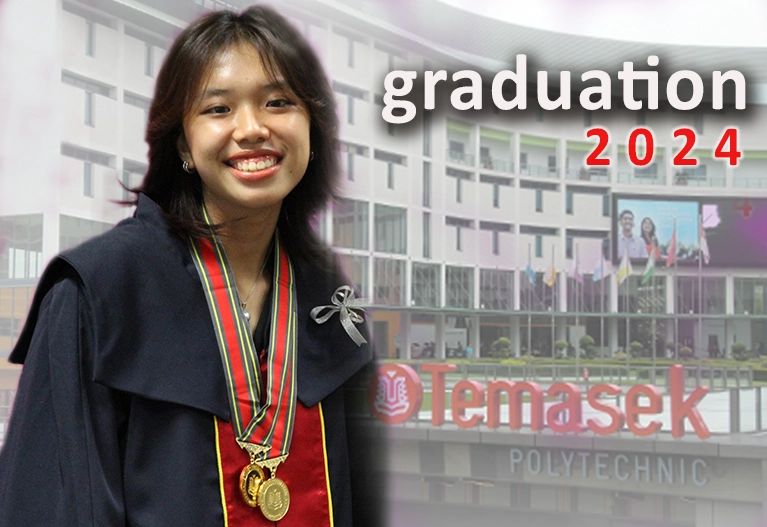
“The ABS diploma has given me an advantage in sustainable design skills, which enhance my abilities and aligns with my passion in architecture."
Cheyenne Wong Xue En (2024)
BA (Architecture), NUS (2027)
Lee Kuan Yew Award (2024)
Course Gold Medallist (2024)
TP (Engineering) Scholar
Bronze Medallist,
WorldSkills Singapore 2023
(Digital Construction)
/Jeslyn%20stage.webp)
“The strong foundation that this diploma has given me — especially in design thinking and sustainability — helps me to stand out. Winning the ASEAN Scholarship and a place in SUTD’s Architecture & Sustainable Design programme is a dream come true – all thanks to ABS diploma!"
Jeslyn Ho (2025)
Course Bronze Medallist (2025)
ASEAN Scholar
B.Sc (Architecture & Sustainable Design), SUTD (2028)
/Crystal-ABS.webp)
“I am glad to have chosen this diploma during the Early Admissions Exercise (EAE). The subjects in this course, with its ideal blend of technical precision and creative freedom, together with the intensive coaching for the WorldSkills competition, gave me the valuable skillsets to make a positive impact in the world!”
Crystal Sui Jin
Tay Eng Soon Gold Medallist (2026)
Course Silver Medallist (2026)
Gold Medallist, WorldSkills Singapore 2025
(Digital Construction)
You may also apply for a BCA-industry scholarship / sponsorship.
For more information, click here.
/Icon(sm).webp)
/Diploma menu photo (new).webp)
Contact
- enghotline@tp.edu.sg
- Website: https://www.tp.edu.sg/eng
-
School of Engineering
Temasek Polytechnic
West Wing Block 10-25A, 32-33
21 Tampines Ave 1
Singapore 529757